
Rising Protectionism from the United States and Africa’s Future Beyond AGOA
Morgan Anderson, Research Analyst, Foreign Policy & Diaspora Studies Lab
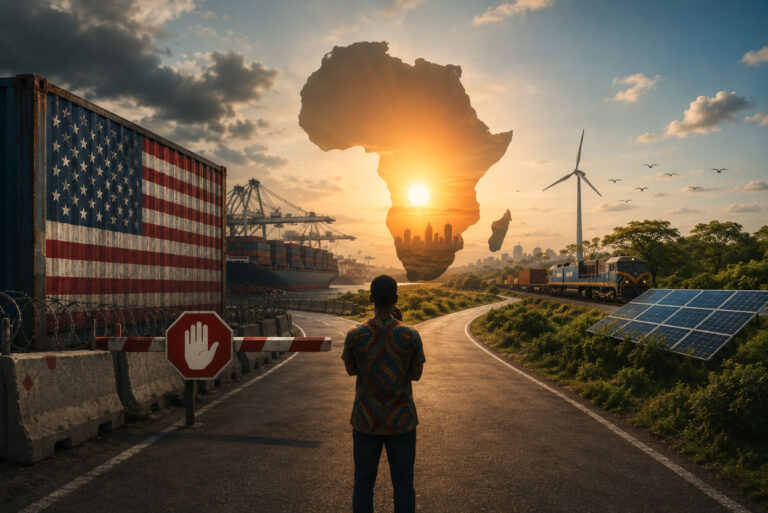
This backgrounder examines the expiration of the African Growth and Opportunity Act (AGOA) and the Trump administration’s expanded use of tariffs and protectionist trade measures, signaling a fundamental shift in U.S.-Africa trade relations. The key takeaway is that African countries should treat rising U.S. protectionism as a long-term structural change rather than a temporary political development, since tariffs often persist across administrations. In response, African economies should diversify export markets, particularly by expanding trade with China and other global partners, and accelerate the implementation of the African Continental Free Trade Area (AfCFTA) to strengthen intra-African trade, attract investment, and promote industrialization. By reducing reliance on preferential access to the U.S. market, Africa can build a more resilient and sustainable trade strategy amid an increasingly uncertain global trading environment.
On September 30, 2025, the United States government allowed the African Growth and Opportunity Act (AGOA) to lapse after 25 years of providing duty-free access to U.S. markets for eligible African countries. AGOA’s lapse was just one aspect of the global shakeup caused by President Donald Trump’s trade and tariff agenda. AGOA was retroactively renewed for one year; however, it is clear that the United States’ trade policy has shifted drastically from its pro-globalization stance. African countries must reckon with this new trade landscape and adjust by diversifying exports to other international markets and by embracing existing trade infrastructure within Africa.
Since President Trump took office in February 2025, the unprecedented nature of the United States’ trade policy has upended the global market. In January 2025, President Trump signed a presidential document laying the foundation for the Administration’s “America First” trade policy. In this executive order, President Trump directed the Secretary of Commerce to recommend measures, including tariffs, to address trade deficits.1America First Trade Policy, 90 F.R. 8471
https://www.federalregister.gov/documents/2025/01/30/2025-02032/america-first-trade-policy In February 2025, President Trump announced global tariffs under the International Emergency Economic Powers Act (IEEPA), issuing blanket duties across Africa, ranging from 11 percent to 49 percent.2Executive Order No. 14257, 3 C.F.R. 15049-15050 (2025).
https://www.federalregister.gov/documents/2025/04/07/2025-06063/regulating-imports-with-a-reciprocal-tariff-to-rectify-trade-practices-that-contribute-to-large-and Then, the Trump administration imposed duties on imports of steel, aluminum, copper, and their derivative products under Section 232 of the Trade Expansion Act of 1962, causing a whipsaw effect in the international trading system. To further destabilize the system, the Supreme Court of the United States held that IEEPA could not be used to impose tariffs, thereby invalidating a major cornerstone of the Trump administration’s tariff arsenal. The Trump administration quickly worked to implement additional tariffs under other authorities, such as Section 122 of the Trade Act of 1974, to fill the gap left by the elimination of IEEPA tariffs. Additionally, the United States Trade Representative (USTR) launched new Section 301 investigations into 60+ countries under the Trade Act of 1974, which could allow USTR to impose tariffs on those countries. This investigation includes African countries such as Angola, Nigeria, and South Africa.3Initiation of Section 301 Investigations of Acts, Policies, and Practices of Various Economies Related to the Failure To Impose and Effectively Enforce a Prohibition on and, in the midst of it, allowed the the Importation of Goods Produced With Forced Labor, 91 F.R. 12884
https://www.federalregister.gov/documents/2026/03/17/2026-05151/initiation-of-section-301-investigations-of-acts-policies-and-practices-of-various-economies-related
The Trump administration implemented its tariff regime with staggering speed and allowed long-term reauthorization of AGOA to fall by the wayside. While AGOA’s terms will continue through December 31, 2028, a one-year extension is insufficient to ensure business certainty and foster long-term investment in Africa’s export markets. The United States has been one of the largest markets for African goods, but the pendulum swings in U.S. trade policy undermine stability, long-term planning and investment, and economic growth.
While much has changed over the past year, the next administration will not easily undo these trade policy initiatives. Many have criticized the Trump administration’s tariff regime, but once tariffs are implemented, it is often politically unviable to remove them. This is because markets, supply chains, customers, and businesses adjust to the tariffs and become accustomed to the new trade environment. Thus, when a new administration takes office, it does not necessarily mean that these tariffs will be repealed.
In 2018, Democratic and Republican legislators voiced widespread opposition to President Trump’s decision to impose tariffs on Chinese imports, citing concerns that these tariffs would hurt American consumers, farmers, and businesses. Six years later, President Joe Biden extended these duties on China, and many members of Congress supported this extension, with some urging him to go even further.4Bade, Gavin. “DC Slammed Trump’s Tariffs. Biden’s Decision to Keep Them Draws a Very Different Reaction.” Politico, 15 May 2024, www.politico.com/news/2024/05/15/biden-tariff-reaction-trump-00158043.
In 1964, European countries imposed tariffs on imports of poultry from the United States. In retaliation, President Lyndon B. Johnson imposed tariffs on a variety of foreign goods, namely, light-duty commercial vehicles and trucks.5Kagan, Julia. “Understanding the Chicken Tax: U.S. Tariff on Light Trucks Explained.” Investopedia, 7 Sept. 2025, www.investopedia.com/terms/c/chicken-tax.asp. This 25 percent tariff on foreign pickup trucks and commercial vans came to be known as the “chicken tax.” The chicken tax was intended to alleviate the American auto industry’s post-World War II economic struggles; 60 years later, it still exists in its original form.
African countries must assume that the current tariff environment will persist long-term and adjust accordingly to rising protectionism from the United States. In recent testimony to the House Ways & Means Committee, USTR Ambassador Jamieson Greer stated that the United States will explore extending and modifying AGOA;6Greer, Jamieson (2026, April 22) Full Committee Hearing on the Trump Administration’s 2026 Trade Policy Agenda with United States Trade Representative Jamieson Greer. House Committee on Ways and Means.
https://waysandmeans.house.gov/event/full-committee-hearing-on-the-trump-administrations-2026-trade-policy-agenda-with-united-states-trade-representattheirive-jamieson-greer/ however, the future of the U.S.-Africa trade relationship remains in flux. As a continent, Africa must shift its international trade priorities elsewhere while leaning into existing trade infrastructure within Africa.
Outside the continent, African countries have the opportunity to expand into other major markets. China recently announced the expansion of its zero-tariff policy for Least Developed Countries to include all African countries, except for Eswatini.7Ng, Kelly. “China Scraps Tariffs for All but One African Nation.” BBC News, BBC, 30 Apr. 2026, www.bbc.com/news/articles/cwy2v509217o A zero-tariff policy alone is not the sole solution to expanding market access, but it is an option for African countries to diversify their exports beyond the United States. China’s zero-tariff policy could also attract foreign direct investment from companies seeking to avoid high tariffs when entering China’s market. Companies could set up manufacturing, processing, and production sites in Africa, creating a new access point for goods to enter China at a lower tariff rate. If this occurs, it could create a flow of investment into Africa’s economy, as well as training and skills programs for African labor.
The prospects for trade within the African continent are expanding as well. The African Continental Free Trade Area (AfCFTA) is one of the largest free trade areas in the world. The AfCFTA has the potential to shift Africa’s trade landscape away from a reliance on natural resources and accelerate its market diversification and manufacturing. This free trade agreement could increase foreign direct investment between 111 percent and 159 percent.8Maliszewska, Maryla, and Michele Ruta. The African Continental Free Trade Area Economic and Distributional Effects. World Bank, 2020, World Bank Group, https://documents1.worldbank.org/curated/en/216831595998182418/pdf/The-African-Continental-Free-Trade-Area-Economic-and-Distributional-Effects.pdf. Full implementation of AfCFTA could result in real income gains of nearly US$450 billion, which would come, in part, from lowered tariffs.9Ibid. Tariffs remain high in some regions of Africa, and non-tariff barriers make trade even costlier. With the full implementation of AfCFTA, the continent could experience immense financial gains while diversifying trade exports.
Africa’s future trade relationship with the United States remains uncertain. Uncertainty undermines long-term investment, business development, and economic growth. It is imperative African countries should evaluate other trade opportunities within and beyond the continent, as the United States’ protectionist agenda is likely to persist beyond the Trump administration.
Sources:
America First Trade Policy, 90 F.R. 8471
https://www.federalregister.gov/documents/2025/01/30/2025-02032/america-first-trade-policy
Bade, Gavin. “DC Slammed Trump’s Tariffs. Biden’s Decision to Keep Them Draws a Very Different Reaction.” Politico, 15 May 2024, www.politico.com/news/2024/05/15/biden-tariff-reaction-trump-00158043.
Executive Order No. 14257, 3 C.F.R. 15049-15050 (2025).
https://www.federalregister.gov/documents/2025/04/07/2025-06063/regulating-imports-with-a-reciprocal-tariff-to-rectify-trade-practices-that-contribute-to-large-and
Greer, Jamieson (2026, April 22) Full Committee Hearing on the Trump Administration’s 2026 Trade Policy Agenda with United States Trade Representative Jamieson Greer. House Committee on Ways and Means.
https://waysandmeans.house.gov/event/full-committee-hearing-on-the-trump-administrations-2026-trade-policy-agenda-with-united-states-trade-representattheirive-jamieson-greer/
Initiation of Section 301 Investigations of Acts, Policies, and Practices of Various Economies Related to the Failure To Impose and Effectively Enforce a Prohibition on and, in the midst of it, allowed the the Importation of Goods Produced With Forced Labor, 91 F.R. 12884
https://www.federalregister.gov/documents/2026/03/17/2026-05151/initiation-of-section-301-investigations-of-acts-policies-and-practices-of-various-economies-related
Kagan, Julia. “Understanding the Chicken Tax: U.S. Tariff on Light Trucks Explained.” Investopedia, 7 Sept. 2025, www.investopedia.com/terms/c/chicken-tax.asp.
Maliszewska, Maryla, and Michele Ruta. The African Continental Free Trade Area Economic and Distributional Effects. World Bank, 2020, World Bank Group, https://documents1.worldbank.org/curated/en/216831595998182418/pdf/The-African-Continental-Free-Trade-Area-Economic-and-Distributional-Effects.pdf.
Ng, Kelly. “China Scraps Tariffs for All but One African Nation.” BBC News, BBC, 30 Apr. 2026, www.bbc.com/news/articles/cwy2v509217o
Foreign Policy and Diaspora Studies Lab (FPDS-LAB)
About the ACSTRAP Foreign Policy and Diaspora Studies Lab
This report was prepared by Morgan Anderson of the Africa Center for Strategy & Policy’s Foreign Policy and Diaspora Studies Lab. Our research on African foreign policy and diaspora studies focuses on regional and international affairs, particularly the implications of great power competition in Africa. The lab looks at institutional policies at the level of the African Union and the relations among African states and the international community.
About the Authors/Lab Contributors
Morgan Anderson holds a bachelor’s degree in international relations from Virginia Tech and a master’s degree in international relations and Global Energy and Environmental Policy from the George Washington University. Morgan is interested in global trade, energy policy, and environmental issues.
