
Africa on the World Stage: Visibility, Exclusion, and Power at the 2026 FIFA World Cup
How Football’s Global Showcase Exposes the Limits of Inclusion and the Possibilities of African Soft Power
Authors: Iniobong Inyang and Ashley Onwuzuruike, Research Analyst, Foreign Policy and Diaspora Studies Lab
EXECUTIVE SUMMARY
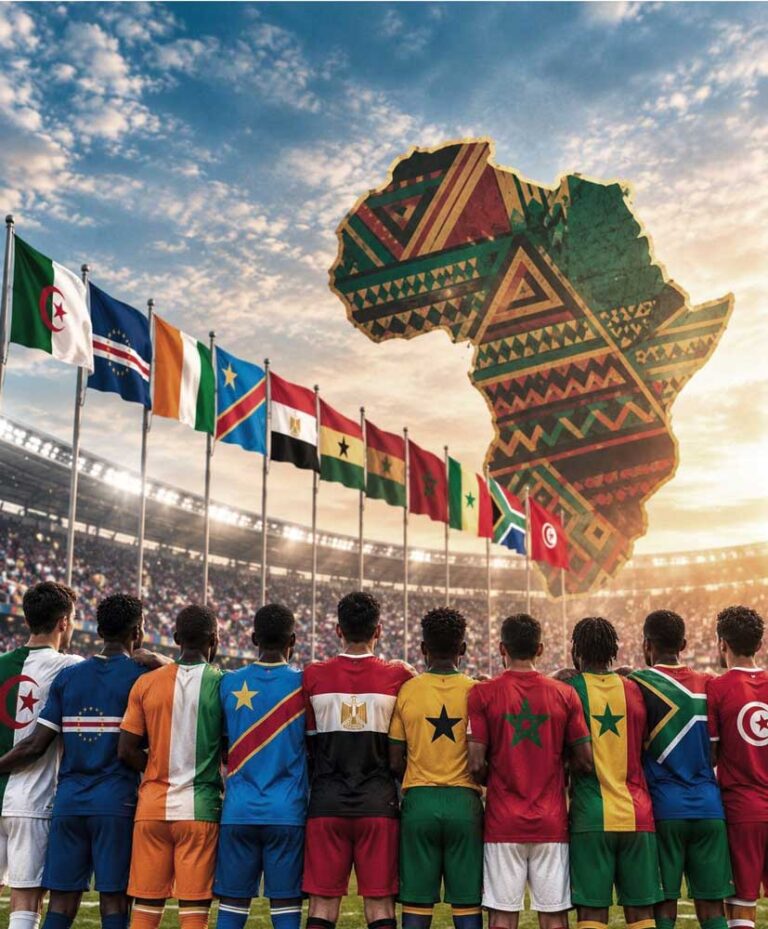
This piece examines the 2026 FIFA World Cup as more than a sporting spectacle, highlighting its significance for Africa’s global visibility, soft power, cultural influence, and diplomatic engagement. The historic participation of ten African teams and their strong performances demonstrated the continent’s growing competitiveness while challenging longstanding perceptions of African football as peripheral to the global game.
At the same time, the tournament exposed persistent barriers facing African supporters and diaspora communities, including restrictive immigration policies, visa challenges, and the high cost of attending matches. The World Cup also highlights the increasingly transnational character of African football, as diaspora networks, dual nationalities, and cross-border talent shape both African and European national teams.
The piece argues that Africa’s growing influence on global football presents an important opportunity for strategic engagement. African governments and non-governmental institutions should leverage sporting success as a soft-power tool, strengthen sports diplomacy, and use major international sporting events to advance cultural, economic, and diplomatic interests. Ultimately, the 2026 World Cup demonstrates that football can serve not only as a platform for African excellence, but also as an instrument for reshaping how Africa is represented and engaged in global affairs.
INTRODUCTION
The 2026 FIFA World Cup will be remembered as a watershed moment for African football. For the first time in the tournament’s history, ten African nations competed on football’s biggest stage, doubling the continent’s representation from 2022. Nine teams advanced to the Round of 32, with several producing historic performances that reinforced Africa’s growing competitiveness on the global stage. Collectively, these results signaled that African football is no longer an emerging force but an established pillar of the global game. Yet the significance of this World Cup extends far beyond the results on the pitch. The tournament became a powerful illustration of how sports intersect with diplomacy, migration, culture, and international politics. Africa’s record representation elevated the continent’s global visibility, strengthened its cultural influence, and reinforced football as an instrument of soft power and nation branding. At the same time, restrictive immigration policies, visa complications, and the high financial costs of attendance prevented many African supporters and members of the African diaspora from fully participating in a tournament that celebrated unprecedented African success. This piece argues that the 2026 FIFA World Cup represents both a sporting milestone and a diplomatic case study. These historic developments have revealed that the World Cup is more than an international sporting competition; it is an arena where questions of identity, representation, soft power, and foreign policy increasingly converge, offering important lessons for African governments seeking to leverage sports as a tool of international engagement and strategic influence.
SHIFTING PARADIGMS: VISIBILITY, REPRESENTATION, AND THE SOFT POWER OF AFRICAN FOOTBALL
A Historic Tournament: Africa’s On-Field Breakthrough
The significance of Africa’s expanded 48-team representation for the 2026 FIFA World Cup was ultimately demonstrated on the field. African teams did more than fill additional places in the tournament; they competed deep into the competition and produced results against some of the world’s strongest teams.1Jonathan Wilson, “African Teams Have a Point to Prove at This World Cup. How Are They Faring?” Guardian, June 22, 2026, https://www.theguardian.com/football/2026/jun/22/africa-is-out-to-prove-a-point-at-this-world-cup. This was more than a statistical milestone; it marked a broader shift in how African football is perceived globally. FIFA expanded the tournament from 32 to 48 teams beginning in 2026, following an assessment of the competition’s format and its implications for football development, competitive balance, and global participation. Historically, Africa’s2Wycliffe W. Njororai Simiyu, “Africa at the World Cup: 10 Teams, Local Coaches and Tactical Depth Usher in a New Era,” The Conversation, May 28, 2026, https://theconversation.com/africa-at-the-world-cup-10-teams-local-coaches-and-tactical-depth-usher-in-a-new-era-283084. presence at the World Cup was constrained by structural inequities in global football governance, with the Confederation of African Football (CAF) allocated only five places in the 2022 tournament despite representing 54 member associations. For the 2026 tournament, FIFA allocated Africa nine direct qualification places.3FIFA, “Bureau of the Council Recommends Slot Allocation for the 2026 FIFA World Cup™,” media release, March 30, 2017, https://inside.fifa.com/en/organisation/media-releases/bureau-of-the-council-recommends-slot-allocation-for-the-2026-fifa-wor-2878254. 4 Confédération Africaine de Football (CAF), 4Confédération Africaine de Football (CAF), “CAF President Dr Patrice Motsepe Is Proud of the Performances of the 10 African National Teams at the FIFA World Cup 2026 and CAF Also Makes Other Important Announcements,” July 22, 2026, https://www.cafonline.com/inside-caf/news/caf-president-dr-patrice-motsepe-is-proud-of-the-performances-of-the-10-african-national-teams-at-the-fifa-world-cup-2026-and-caf-also-makes-other-important-announcements/. Hosted across North America, the expansion to ten African teams therefore represented both a correction of longstanding underrepresentation and a validation of Africa’s growing competitiveness. More importantly, the performances of African nations throughout the tournament reinforced the view that African teams are no longer peripheral participants but rather credible contenders capable of competing with football’s traditional powers. They advanced further than ever before in such numbers, with nine of the continent’s ten representatives reaching Round of 32, the highest proportion of African teams ever to progress beyond the group stage. Cape Verde’s historic debut, Egypt’s first-ever progression to the Round of 16, and Morocco’s run to the quarterfinals demonstrated5Ibid. reinforced that these were not isolated successes. CAF, as the continent’s governing football body, coordinated African participation through its qualifying framework and subsequently highlighted the achievement as evidence of the continent’s growing competitiveness. The expanded 48-team format therefore provided more than additional visibility; it created a larger platform on which African teams could challenge longstanding perceptions of the continent as a peripheral force in global football. With ten teams competing, Africa is no longer represented by a handful of outliers but by a diverse and dynamic cohort that reflects the continent’s cultural depth. This visibility carries broader implications; it not only enhances Africa’s standing within international football but also contributes to reframing perceptions of African states in global discourse. National teams become proxies for state identity, showcasing organizational capacity, discipline, and excellence on one of the world’s most watched stages. In this sense, participation itself becomes a form of soft power, placing African countries on a more equal symbolic footing with traditional football powers in Europe and South America. Moreover, the expanded tournament structure has normalized African teams’ presence in later stages of the competition. The psychological barrier that once limited expectations has begun to erode, replaced by emerging confidence, both within the continent and across the diaspora, that African teams belong among the elite.
IDENTITY BEYOND BORDERS: DIASPORA, TALENT, AND TRANSNATIONAL FOOTBALL
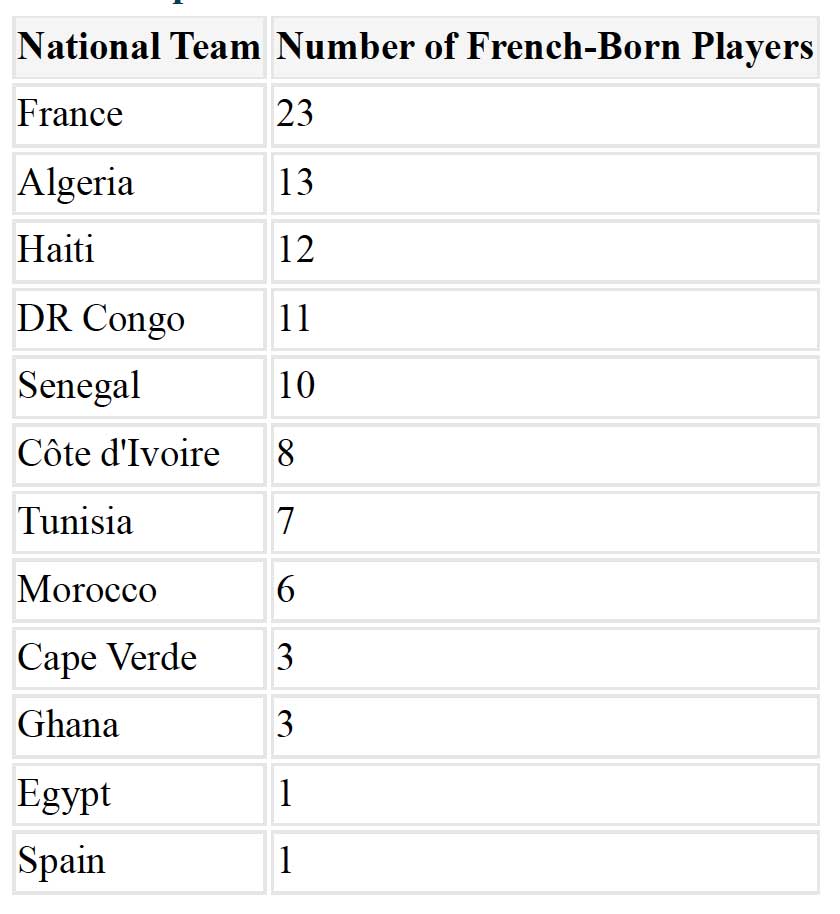
The tournament has also highlighted the complex realities of identity within the African diaspora. Numerous players of African heritage continue to represent European and other national teams rather than their countries of ancestral origin.6Fernando Duarte, “Blood Ties and Opportunity: Why More World Cup Players than Ever Are Not Representing Their Birth Nations,” BBC World Service, June 23, 2026, https://www.bbc.com/news/articles/cz9lj5k7lp1o. While this reality often sparks debate, it also reflects the global reach and influence of African communities worldwide. The presence of African-descended players across multiple national teams highlights how deeply African talent, culture, and identity are woven into the fabric of contemporary global football. At the same time, many players representing African national teams were either born abroad or developed through European academy systems, demonstrating how migration, and diaspora networks, and cross-border talent development have become integral to modern African football.7Steff Ndei, “Stadiums, Statecraft and the Diaspora Surge in African Football,” Interstice, September 15, 2025, https://steffndei.com/stadiums-statecraft-and-the-diaspora-surge-in-african-football/. As shown in Figure 1, French-born players featured prominently across several African squads at the 2026 FIFA World Cup, underscoring the increasingly transnational character of both African football and the African diaspora.
Figure 1. French-Born Players Representing Multiple National Teams at the 2026 FIFA World Cup
Moreover, the historic expansion to 10 CAF nations has transformed global viewership by tapping into massive regional fanbases. This record-breaking representation, amounting to over 20% of the tournament field, has driven record international broadcast audiences, increased pan-African solidarity viewing, and expanded African football’s commercial footprint.8Newton Adika, “World Cup 2026 Report: Interest, Viewership and Betting in Africa,” GeoPoll, June 10, 2026, https://www.geopoll.com/blog/world-cup-2026-report-interest-viewership-and-betting-in-africa/. A large share of Africa’s 54 member associations is now represented, resulting in more local populations being emotionally invested in the tournament. Polls show that in regions where a specific home country did not qualify, viewers organically adopted neighboring nations as regional favorites. This pattern reflects a combination of national pride, regional affinity, and pan-African solidarity, transforming World Cup viewership into a broader expression of shared sporting identity.9Ibid.
Beyond the pitch, African participation in the 2026 World Cup has spotlighted the continent’s growing influence in global cultural production. African teams have turned the tournament into a stage not only for athletic performance but also for projecting identity, aesthetics, and heritage.10Perpetua Etyang, “African Nations Blend Fashion, Culture in World Cup 2026 Send-Offs,” Star, June 7, 2026, https://www.the-star.co.ke/news/2026-06-07-african-nations-blend-fashion-in-world-cup-send-offs. From iconic kits to carefully curated arrival outfits and send-off ceremonies, African nations are showcasing themselves as cultural trendsetters within the global sports ecosystem.11Phan Tich Giay, “African Nations Arrive at 2026 World Cup in Striking Custom Outfits,” Footy Headlines, June 13, 2026, https://www.footyheadlines.com/3590282850/african-nations-arrive-at-2026-world-cup-in-striking-custom-outfits.html. More broadly, the World Cup serves as an instrument of diplomatic soft power. International sporting events provide countries with opportunities to shape perceptions, strengthen people-to-people connections, and enhance national branding. For African nations, participation on this expanded stage offers a unique opportunity to showcase economic potential and cultural richness. In an increasingly interconnected world, football has become more than a game; it is a vehicle through which African nations can advance their interests, deepen engagement with global audiences, and strengthen their place within international affairs.
THE EXCLUSION PARADOX: COST, VISAS, AND THE LIMITS OF INCLUSION
Economic Barriers
Although this year’s World Cup has generated noteworthy benefits for participating African nations, it has concurrently had adverse effects for African fans and members of the African diaspora. Socioeconomically, the games have revealed significant financial barriers and affordability gaps. Tickets reportedly ranged from $60 for group-stage matches to $6,730 for the final games, depending on the seating tier and the games’ geographic location. These ticket prices are estimates, as tickets were managed through dynamic pricing and varied by group and team. As such, not all teams received the same attention, which also affected ticket pricing.
For African fans, particularly those with low incomes, this year’s tickets cost more than individuals would normally spend on basic living expenses. Even the cheapest ticket was a financial commitment for fans of some smaller African nations, especially when you factor in other travel expenses.
For example, a Category 1 ticket to a match between Côte d’Ivoire and Germany in Toronto cost an Ivorian fan $600, plus additional expenses such as flights, visas, food, local transport, and accommodations.12Associated Press, “2026 World Cup Ticket Prices,” December 15, 2025, https://apnews.com/article/fifa-world-cup-soccer-cd8933c06016cccf9d870ee77a21ca05. As regards flights, a round-trip ticket from Abidjan to Toronto in June 2026 could range from $1,000 to nearly $1,700, depending on the airline and booking time, with costs potentially even higher given the World Cup’s demand.13Skyscanner, “Abidjan (ABJ) to Toronto (YYZ): 1 Adult, Economy,” 2026, https://www.skyscanner.com/transport/flights/abja/ysba/270617/270624/?adultsv2=1&childrenv2=&cabinclass=economy&rtn=1&outboundaltsenabled=false&inboundaltsenabled=false&preferdirects=false. Note that these prices are variable, as they are often affected by dynamic pricing. Accommodations, particularly budget inns and hostels that run around CAD 80‑120 ($~57 to ~$85) per night, rose to CAD 150‑200 (~$106 to ~$142) per night due demands of the tournament.14Nishadil, “Toronto Hotel Prices during the 2026 FIFA World Cup: What to Expect,” June 1, 2026, https://nishadil.com/news/toronto-hotel-prices-during-the-2026-fifa-world-cup-what-to-expect/fffb364252f854bec90171177ce70cf3. Three‑star hotels, which typically range from CAD 150‑200, also reportedly increased to somewhere between CAD 250‑350 (~$177 to ~$248).15Ibid. Combined with other expenses, these costs could bring the total cost of attending a match in the United States, Canada, or Mexico to between $3,000 and nearly $20,000, or potentially more.16Pam O’Brien, “Cost of the 2026 World Cup: How Much Americans Will Spend in Host Cities,” Stacker, June 2, 2026, https://stacker.com/stories/sports/cost-2026-world-cup-how-much-americans-will-spend-host-cities. Compared with the average minimum wage for a full-time worker, who earns CFA 75,000 per month (~$134.65/month), these expenses are equivalent to months of wages.17Wage.is, “Average Salary in Ivory Coast,” 2026, https://wage.is/ivory-coast/. This is equally challenging for supporters of other African national teams, such as Tunisia ($148.96 minimum wage per month), Cape Verde ($122.46 minimum wage per month), Egypt ($146.65 minimum wage per month), Senegal ($134.74 minimum wage per month), and Algeria ($184.32 minimum wage per month).18Data for all countries except Senegal: World Population Review, “Minimum Wage by Country 2026,” 2026, https://worldpopulationreview.com/country-rankings/minimum-wage-by-country. Data for Senegal: Wage.is, “Average Salary in Senegal,” 2026, https://wage.is/senegal/.
Similarly, many diaspora members living in North America faced the same affordability gap as their home-country counterparts, despite their closer proximity to host venues. While some diaspora supporters can afford the monetary commitment attached to the games, the financial cost of the World Cup remains high for others, especially those with a limited income. Depending on their proximity to the venue, flights, accommodation, and local transport are additional expenses these diaspora supporters will need to pay for alongside their ticket purchase. For example, in the case of matches in the United States, a round-trip train ticket to a match at MetLife Stadium (New Jersey) from New York19The train ticket fare of $12.90 varies depending on the origin location. See HelpNewYork, “MetLife Stadium by NJ Transit: A Step-by-Step Walkthrough from Penn Station and Beyond,” https://helpnewyork.com/metlife-stadium-nj-transit-walkthrough-penn-station-secaucus/. increased significantly from $12.90 (normal fare)20Tom Shea and Jennifer Millman, “NJ Transit Rail Ticket Cost for World Cup Games Lowered Again, While NY Slashes Bus Price,” NBC New York, May 12, 2026, https://www.nbcnewyork.com/world-cup/nj-transit-rail-ticket-cost-for-world-cup-games-lowered-again-while-ny-slashes-bus-price/6501314/.. Ticket scarcity and market resales had additionally exacerbated affordability gaps for such diaspora supporters. Popular matches often saw their tickets selling out quickly, with high demand from local and international fans. In many instances, secondary markets inflated their prices.
Compared with the 2022 Qatar World Cup, this year’s prices were markedly higher—reportedly reaching as much as ten times the 2022 levels.21Soccer Era Team, “FIFA World Cup 2026 Ticket Prices vs 2022 Qatar: Why Fans Are Calling It the Most Expensive World Cup Ever,” The Soccer Era, May 14, 2026, https://thesoccerera.com/fifa-world-cup-2026-ticket-prices-vs-2022-qatar/. For the previous tournament, ticket pricing was determined using a fixed, four-category pricing structure. While it was not perfect, it was predictable, and fans could gauge how much each category ticket would cost. Because of this, ticket prices for group stage matches remained within the range of $11 to $220, with the cheapest ticket—a Category 4 group match—costing $11.22Fatih Erel, “World Cup 2026 Ticket Prices Soar as Fans Face Costs up to 10 Times Higher than Qatar,” Anadolu Ajansı, June 11, 2026, https://www.aa.com.tr/en/sports/world-cup-2026-ticket-prices-soar-as-fans-face-costs-up-to-10-times-higher-than-qatar/3962973. Although attendees still faced other expenses, these lower fixed prices made the 2022 World Cup matches considerably more accessible. Despite complaints raised by fans and the Football Supporters Europe (FSE), FIFA President Gianni Infantino defended the high costs of the 2026 FIFA World Cup and blamed them on “market rates” that apply in the U.S.23Catherine Gionio, “FIFA Says ‘Market Rates’ Explain World Cup Prices. Economists Say the Market Was Rigged by Design,” Fortune, June 9, 2026, https://fortune.com/2026/06/09/world-cup-fifa-ticket-prices-hidden-markets/.
Overall, the exorbitant costs associated with this year’s World Cup imposed significant economic pressures, compelling both African fans and diaspora supporters to make challenging financial trade-offs between attending the game, paying rent, or using the same funds for other needs, such as sending remittances to their home countries.
Political Barriers.
Throughout the World Cup, the Fédération Internationale de Football Association (FIFA) had also branded the tournament for its inclusivity, owing to the extensive participation of various national teams this year. As mentioned previously, ten African teams had participated in the games, the largest number ever in FIFA’s history. While this is a noteworthy feat for the continent, the games had concurrently become marred by immigration restrictions and barriers.
One of the host countries, the United States, has embraced a restrictive approach to immigration under the current administration which has, in turn, created visa-related complications and entry denials for African fans, national team players, and diaspora supporters. At first, FIFA issued assurances that the U.S. Department of State had promised that all eligible athletes, officials, and fans from qualified nations would be permitted to attend.24Rob Harris, “World Cup Bid: US Assures FIFA on Travel Discrimination Fear,” Associated Press, May 8, 2018, https://apnews.com/world-cup-bid-us-assures-fifa-on-travel-discrimination-fear-44bab9e072a04b46a20ddf442cca9f82. These assurances, however, have proven shaky.
One notable example was the denial of entry to renowned Somali referee Omar Artan, who had been selected to officiate at the World Cup.25Matthew Mkope Bigg, “Somali Referee Says His World Cup Dream Is Crushed after U.S. Denies Entry,” New York Times, June 9, 2026, https://www.nytimes.com/2026/06/09/world/africa/somali-referee-world-cup-us-entry-omar-artan.html. Despite having a valid U.S. visa and holding a diplomatic passport, Artan was denied entry into the United States at Miami International Airport. According to media reports, Artan was interviewed for eleven hours about his purpose for traveling to the United States and his purported links to the Somali terrorist organization, Al-Shabaab, despite telling border officials he knew nothing about the organization.26Ibid. After providing official FIFA documentation with photos from his refereeing career, he was placed in a holding cell and subsequently put on a plane to Istanbul, from where he took a connecting flight back to his hometown of Mogadishu. The U.S. Customs and Border Protection agency reportedly maintained Artan was “determined to be inadmissible” to the country “due to vetting concerns,”27Joe Stanley-Smith and Sophia Cai, “World Cup Referee from Somalia Barred from Entering US,” Politico, June 8, 2026, https://www.politico.com/news/2026/06/08/world-cup-referee-somalia-00953959. albeit having been listed as one of FIFA’s 52 World Cup referees. Somalia is one of the 12 countries on a travel ban list introduced by President Donald Trump in June 2025.28Donald J. Trump, “Restricting the Entry of Foreign Nationals to Protect the United States from Foreign Terrorists and Other National Security and Public Safety Threats,” presidential proclamation, June 4, 2025, The White House, https://www.whitehouse.gov/presidential-actions/2025/06/restricting-the-entry-of-foreign-nationals-to-protect-the-united-states-from-foreign-terrorists-and-other-national-security-and-public-safety-threats/. In response to the incident, a FIFA spokesperson came forward with a statement, stating that “FIFA is not involved in host country immigration processes, including visa adjudications, and has been informed by authorities that Mr. Artan’s status will not be changed at present.”29Ibid. The spokesperson further maintained that “in line with previous FIFA events, a host government ultimately determines who receives a visa and who is admitted into their country”, demonstrating its complete alignment with the actions and policies of the U.S. government.30Ibid.
African fans also encountered U.S. visa-related issues. Fans of all African national teams not only required a visa to attend the games in the country, but according to regulations set by the U.S. Department of State before the World Cup, residents of Algeria, Cape Verde, Senegal, Côte d’Ivoire, and Tunisia who wanted to attend the games were also required to post bonds of up to $15,000 in order to obtain tourist visas to enter the United States.31US Department of State, “Countries Subject to Visa Bonds,” last updated May 13, 2026, https://travel.state.gov/content/travel/en/News/visas-news/countries-subject-to-visa-bonds.html. Although the State Department announced that it would waive this requirement for some World Cup attendees, the waiver applied only to those who had both purchased World Cup tickets and opted in to the FIFA “priority appointment scheduling system” (FIFA PASS) by April 15, despite the bond being required on said date.32Ibid. As such, fans from the aforementioned countries who did not purchase their tickets by the set date were expected to post the bond in addition to other expenses to attend the games.
Fans of the Ivorian, Moroccan, and Senegalese national teams were similarly prohibited from attending their teams’ matches in the United States. Forty members of multiple Moroccan football team supporter associations were denied U.S. visas ahead of the games, according to media reports.33Khadija Tachfine, “Dozens of Moroccan Fans Denied US Visas for World Cup, Losing Thousands in Tickets, Hotel Bookings,” HesPress English, June 5, 2026, https://en.hespress.com/139375-at-least-40-moroccan-fans-denied-us-visas-for-world-cup-losing-thousands-in-tickets-hotel-booking.html. No explanation was reportedly given for the visa denials. With regard to Côte d’Ivoire and Senegal, both countries were added in December 2025 to the list of countries with partial restrictions on entry to the United States, with Trump reportedly citing “screening and vetting deficiencies” as the main reason for the suspensions.34Al Jazeera and News Agencies, “AFCON Senegal, Ivory Coast Fans React to Trump’s World Cup 2026 Travel Bans,” Al Jazeera, January 13, 2026, https://www.aljazeera.com/sports/2026/1/13/afcon-senegal-ivory-coast-fans-react-to-trumps-world-cup-2026-travel-bans.
The restrictions included an exception for players, team officials, and immediate relatives travelling to the World Cup. But no allowance was made for supporters. Due to the restrictions, the Côte d’Ivoire and Senegal national teams competed in the World Cup for the first time without official supporter delegations from their respective countries.
The restrictions prompted discontent and frustration from African fans, with many refusing to attend the games. “I don’t know why the American president would want teams from certain countries not to take part. If that’s the case, they shouldn’t agree to host the World Cup,” said Senegal supporter Djibril Gueye.35Associated Press, “Trump Travel Ban Leaves Senegal and Ivory Coast Fans in Limbo for World Cup,” NBC News, January 13, 2026, https://www.nbcnews.com/sports/soccer/trump-travel-ban-senegal-ivory-coast-world-cup-rcna253883.
With so many African football fans effectively kept from the World Cup by the United States’ immigration policies, the burden fell on the African diaspora to fill the void. Nevertheless, these fans faced comparable risks as their home country counterparts. With most matches being played in the United States—78 of 104, including the final—there was mounting concern in the lead-up to the games about potential activity by the U.S. Immigration and Customs Enforcement (ICE) in and around the cities where matches would be played.36Human Rights Watch, “US: ICE Arrest at FIFA Event Spotlights Dangers for World Cup,” December 3, 2025, https://www.hrw.org/news/2025/12/03/us-ice-arrest-at-fifa-event-spotlights-dangers-for-world-cup; Claire Wang, “‘We Want Fans to Know the Risks’: US Immigrant Rights Groups Mobilize across World Cup Host Cities amid ICE Fears,” Guardian, June 1, 2026, https://www.theguardian.com/us-news/2026/jun/01/ice-fifa-world-cup-immigrant-rights.
The July 2025 arrest and deportation of an asylum seeker who took his children to the 2025 FIFA Club World Cup tournament final in New Jersey spotlighted these concerns.37Human Rights Watch, “US: ICE Arrest at FIFA Event.” In that case, an immigration judge denied the father’s asylum claim in September. Traumatized by three months of detention, the father decided not to pursue further legal action, despite his fear of returning to his country of origin. The family had to purchase air tickets for his “voluntary departure.”38Ibid. This source also provides more background information on the legal case.
Roughly 2.52 million immigrants from Sub-Saharan Africa reside in the United States, with a wide variety of diaspora communities spread across the country, including major metropolitan areas such as Washington, D.C., New Jersey/New York, Dallas, Minneapolis, Miami, and Atlanta.39Allison Rutland and Jeanne Batalova, “Sub-Saharan African Immigrants in the United States,” Migration Information Source, Migration Policy Institute, October 16, 2025, https://www.migrationpolicy.org/article/sub-saharan-african-immigrants-united-states-2025. The possibility of racial profiling and detention by ICE agents stoked angst among some fans of the diaspora, with some similarly choosing to forgo the U.S. matches altogether and instead stick to the matches in Canada or Mexico. However, traveling outside the United States to attend the other matches had its own risks. Upon returning to the United States, these individuals may face an increased likelihood of entry denials during immigration and customs checks as well as the potential of forced repatriation to their countries of origin, notwithstanding possession of the appropriate legal documentation. In the face of both possibilities, not attending any matches altogether appeared to be the safest choice for some fans. Infantino reportedly fended off criticism and concerns regarding these issues, saying that FIFA’s executives are not “kings of the world” and cannot override government decisions.40Anushe Engineer, “Which World Cup Teams, Players and Officials Were Denied US Visas Entry?” Al Jazeera, June 11, 2026, https://www.aljazeera.com/sports/2026/6/11/which-world-cup-teams-players-and-officials-were-denied-us-visas-entry.
In view of the prevailing political environment, FIFA’s assertions that the 2026 World Cup is an inclusive tournament unfortunately seem hollow. Multiple advocacy, civil society groups and human rights organizations came forward to criticize the U.S.’ visa restrictions, mobilizing efforts to protect fans and residents from immigration enforcement activities.41Wang, “‘We Want Fans to Know the Risks.’” United Nations High Commissioner for Human Rights Volker Türk similarly “called for a ‘massive rethink’ of U.S. immigration and security policies ahead of the World Cup, warning that racial profiling, surveillance, and aggressive enforcement are already affecting teams, officials, and supporters”.42UN News, “UN Rights Chief Urges ‘Massive Rethink’ of US Immigration Policies ahead of World Cup,” June 10, 2026, https://news.un.org/en/story/2026/06/1167692.
For some long-time African football fans and diaspora supporters, this year’s World Cup was probably the first tournament in which their country was represented. But amid the political climate unfolding in one of its host venues and FIFA’s shifting position in response to the current landscape, this moment of visibility had instead turned the World Cup into multiple instances of exclusion, with African fans and diaspora supporters considered an afterthought. As a result, this year’s World Cup became synonymous with localized politics rather than a celebration and commitment to inclusivity and diversity.
FROM PITCH TO POLITICS: LESSONS AND RECOMMENDATIONS FOR AFRICAN STATECRAFT
Although exclusionary policies and practices often overshadowed the excitement surrounding this World Cup, they equally underscored the importance of diplomatic leverage and highlighted the tournament’s utility as a diplomatic instrument. Football has long played a political role across Africa, becoming intertwined with African anti-colonial movements and international recognition for newly independent states during the 20th century. Independence movements in countries such as Algeria and Sudan made football an integral part of their stories, creating football leagues as a way to unite their respective communities.43Al Jazeera World Documentary, “Football, an Anti-Colonial Resistance Tool in Algeria & Sudan,” YouTube video, July 9, 2024, https://www.youtube.com/watch?v=D7LkFffZ0T4; Christopher Tounsel, “Before the Bright Star: Football in the Anglo-Egyptian Sudan,” Journal of Eastern African Studies 12 (2018): 1–19, https://doi.org/10.1080/17531055.2018.1514851. This has not only made the World Cup a notable platform for African national teams, fans, and the diaspora but has equally served as a valuable instrument through which African governments advance a range of foreign policy objectives. The tournament should therefore be understood not only as a sporting event, but also as a diplomatic arena where countries can preserve channels of engagement, strengthen relationships, and maintain dialogue even amid periods of political tension or deteriorating diplomatic ties.
While none of the African teams reached the semifinals, they nevertheless garnered support and recognition from both local and international football fans. Collectively, nine African teams recorded 10 wins, 10 losses, and 10 draws during the group stage in this World Cup, securing enough spots in the expanded knockout format for the Round of 32.44BellaNaija, “From the Group Stage to the Quarterfinals: How Africa Performed at the 2026 FIFA World Cup,” July 14, 2026, https://www.bellanaija.com/2026/07/african-teams-performance-review-2026-fifa-world-cup/.With nine teams advancing from the group stages, historic milestones were also achieved by Egypt, Cape Verde, and Morocco, with the latter making a strong quarterfinal performance. The popularity and recognition these teams were able to achieve present themselves as a valuable opportunity.
This year’s tournament provided African governments ample time to strengthen their place in international affairs, whether through culture, diplomacy, trade, or international outreach. Through their national team’s increased visibility, these governments were able to leverage the popularity to attract investment, secure broadcasting rights, and strengthen partnerships with global brands. Doing so not only enhanced their countries’ international image but also turned their national team’s success into economic and diplomatic capital. A prime example is the Moroccan government’s use of the Atlas Lions, its national team, high-level performance during AFCON 2025 as well as in the 2022 and 2026 World Cups. The team’s performance—including a 2022 semi-final run, a 2026 quarterfinal performance, an AFCON 2025 victory, and a sixth-place FIFA ranking—helped shift Rabat’s international profile from an underdog, regional player to a country with significant global reach. AFCON 2025, in particular, reinforced an image of consistency and resilience, building on Morocco’s performance in the 2022 World Cup. In doing so, it placed Rabat at the center of global sporting coverage and positive media attention. With newfound popularity, the government leveraged the attention to spur international interest in the country’s culture, food, history, and destinations—in turn helping.45Adil Faouzi, “AFCON 2025: Morocco Saw 190% Spike in Visitor Spending during Tournament,” Morocco World News, February 13, 2026, https://www.moroccoworldnews.com/2026/02/278734/afcon-2025-morocco-saw-190-spike-in-visitor-spending-during-tournament/. In 2025, nearly 20 million tourists visited the country during AFCON 2025, marking a 14% year-on-year increase for the country’s tourism sector.46AFCON 2025: Morocco Saw 190% Spike in Visitor Spending During Tournament,” Morocco World News, February 13, 2026, moroccoworldnews.com The heightened recognition is also extending into the country’s other economic sectors and investments.47For information and background on Morocco’s use of football for statecraft, please find its case study in Figure 2.
African governments could also harness the increased visibility for nation branding to showcase their culture, governance, and sociopolitical achievements. To do this, they can align their national narratives with the tournament’s global spotlight to counter stereotypes and position themselves as important actors on the world stage. During the 2014 World Cup, the host country Brazil used the tournament as a public diplomacy and nation‑branding strategy to improve its global influence and increase its soft power.48Daniel Buarque, “One Country, Two Cups—The International Image of Brazil in 1950 and in 2014: A Study of the Reputation and the Identity of Brazil as Projected by the International Media during the Two FIFA World Cups in the Country,” International Journal of Communication 9 (2015): 1300–1318, https://ijoc.org/index.php/ijoc/article/view/3351/0. It leveraged the tournament’s global spotlight to invoke a rhetoric that aligned its national identity with football. Through extensive cultural programming, the government projected desired images and messages that challenged negative stereotypes of Brazil as a “party country.”49Ibid. Doing so helped Brazil portray itself as an emerging economic power on the world stage and assume the role of an influential country in international affairs.50Ibid. Although Brazil faced a wave of negative coverage regarding its capacity to host the tournament in the lead-up to the World Cup, as well as domestic challenges stemming from large-scale demonstrations against the tournament, these concerns quickly subsided. According to a poll conducted after the tournament, “more than 60% of journalists said that the World Cup had improved Brazil’s image”, with most agreeing that it was probably the best tournament in history.
After seeing the increased fervor of this year’s World Cup, African countries with established tourist infrastructure should continue to bid to host the tournament in the future. Hosting major football tournaments has generated significant economic activity, particularly in sectors such as tourism, construction, transportation, and media. This has been illustrated in South Africa and Morocco, namely in South Africa’s hosting of the 2010 FIFA World Cup and Morocco’s organization of AFCON 2025 and its upcoming co-organization of the 2030 World Cup with Spain and Portugal. African countries that host future tournaments should take note of Brazil’s strategy and use it to project a more stable, modern, and globally relevant image abroad. This can be done through media coverage, commercial partnerships, and cultural programming, creating a positive global narrative that aligns with their regional and foreign policy interests.
Both instances could offer valuable lessons that African governments could emulate to develop strategies for improving their international profile, boosting their national pride, and consolidating their diplomatic influence. At the same time, several host countries have spent billions preparing for the tournament, and evidence has demonstrated that costs often exceed short-term, quantifiable benefits.51Ria Basu, “Why Countries Overpay for the World Cup: A Political Economy of Mega-Event Bidding,” Columbia Economic Review, March 30, 2026, https://cer.econ.columbia.edu/news/why-countries-overpay-world-cup-political-economy-mega-event-bidding. As such, African leaders must examine the true social and economic impacts of hosting these events, as they will require long-term evaluation and careful study due to potential issues, such as rising costs, social displacement, and environmental implications.
Case Study: Morocco’s Hosting of AFCON 2025 and the 2030 World Cup
Morocco’s organization of AFCON 2025 and the 2030 World Cup is a prime example of a country that uses mega-sporting events as a soft power tool. However, what makes Morocco’s case particularly distinctive is how it effectively converted its national team’s success into strategic influence. Its semifinal run at the 2022 World Cup in Qatar was particularly historic, as it became the first African and Arab country to reach that stage of the tournament.52Karim Zidan, “How Morocco Turned Football into a Tool of Statecraft,” Wired, July 24, 2026, https://www.wired.me/story/how-morocco-turned-football-into-a-tool-of-statecraft. This impressive sporting performance gave Rabat unprecedented global visibility, transforming its image from a regional footballing power to a credible competitor on the global stage. Rabat’s triumph at AFCON 2025 also reinforced this image. With this newfound visibility, Rabat was able to combine its national team’s sporting success with decades of infrastructure and governance investments.
At the same time, Rabat used football as a strategic tool to advance its foreign policy goals and support its broader economic development and modernization agendas. Although the agricultural sector is a cornerstone of Rabat’s economy, it is losing ground in the face of climate change and drought.53Mohammed Mahmound, “The Impact of Climate Variability on Morocco’s Agriculture,” Middle East Institute, April 8, 2025, https://mei.edu/publication/impact-climate-variability-moroccos-agriculture/. In light of these challenges, the government has actively begun expanding its industrial base, services sector, and tourism industry to compensate for the waning agricultural sector.54Ewan Scott, “Morocco’s 2030 World Cup Bid Signals Sweeping National Modernization Push,” Foreign Policy Journal, June 19, 2026, https://www.foreignpolicyjournal.com/2026/06/19/moroccos-2030-world-cup-bid-signals-sweeping-national-modernization-push/. Hosting both AFCON 2025 and the 2030 World Cup, in other words, equally demonstrated Rabat’s efforts to legitimize its major domestic investments.
In the case of AFCON 2025, the games helped Morocco to effectively leverage its infrastructure growth, geopolitical influence, and long-term economic and social development. Rabat invested heavily in preparation for the competition by “upgrading stadiums, transport networks, and public services as part of a broader effort to position the country as a regional hub for major international events.”55Nana Oye Ankrah, “AFCON Delivers Economic Lift for Morocco, Creating 100,000 Jobs, Minister Says,” African Business Insight, January 22, 2026, https://africabusinessinsight.com/afcon-delivers-economic-lift-for-morocco/. Supported by public-private partnerships, these investments not only helped Rabat compress 10 years of planned development projects into a much shorter timeframe (2024-2025), despite initial controversies and concerns from the public,56Ibid. but the tournament’s earnings are also expected to fund 80% of the infrastructure needed for the 2030 World Cup.57Adil Faouzi, “Morocco’s €1.5 Billion AFCON Revenue Covers 80% of 2030 World Cup Costs,” Morocco World News, January 27, 2026, https://www.moroccoworldnews.com/2026/01/276524/moroccos-e1-5-billion-afcon-revenue-covers-80-of-2030-world-cup-costs/.
AFCON 2025 furthermore set the stage for the country’s sustainable national growth. The tournament, which took place from December 21, 2025, to January 18, 2026, directly impacted Morocco’s economic growth and tourism industry, reportedly pushing the national GDP growth rate to 4.5% from approximately 3.79%58Ankrah, “AFCON Delivers Economic Lift for Morocco”; Statbase, “GDP Growth | Africa | 2024,” 2024, https://statbase.org/datasets/economics/gdp-growth/?syear=2024&mo=164560&filter=&sort=. and air passenger traffic to a record high owing to its timing during the holiday season.5959 job opportunities, supporting local businesses across multiple sectors and providing a direct boost to the national economy.60Ankrah, “AFCON Delivers Economic Lift for Morocco.”
The economic returns of AFCON 2025 confirm that Rabat’s organization of the tournament was a major financial success. Some analysts report that Morocco garnered financial gains exceeding 1 billion euros ($1.17 billion) from hosting AFCON 2025, with domestic demand surging by 25% during the tournament.61Middle East Online, “Morocco Scores Big as AFCON Generates over $1.1 Billion in Economic Boost,” January 22, 2026, https://middle-east-online.com/en/morocco-scores-big-afcon-generates-over-11-billion-economic-boost. The tournament not only helped secure long-term infrastructure developments, covering road networks, airport upgrades, rail infrastructure, and public transport systems, including buses, but its organizational quality, spectator experience, security management, and international media coverage equally helped bolster and consolidate Morocco’s credibility with global sporting bodies as well as regional and European partners on the world stage. The 2025 AFCON title (after Senegal’s disqualification) that Rabat secured further cemented its reputation on the global stage as a formidable actor, demonstrating sustained success in both hosting and athleticism.
In the lead-up to the 2030 World Cup, AFCON 2025 served as a strategic rehearsal and a showcase of Morocco’s capacity to host the upcoming tournament, producing measurable economic, diplomatic, symbolic, and institutional gains. It tested and demonstrated Rabat’s readiness to manage a continent-wide sporting event, which will mirror the World Cup’s complexity and magnitude.
Like AFCON 2025, the country intends to use the upcoming World Cup as part of a foreign and domestic policy strategy designed to enhance its international image and strengthen its economic development through infrastructure projects. Rabat’s co-organization of the World Cup with Spain and Portugal will also reinforce its efforts to strengthen both its bilateral relations and commercial ties with its Iberian neighbors, who will also help offset the tournament’s remaining infrastructure burden.
While there are controversies surrounding Morocco’s investments for the World Cup, as well as sustainability and environmental concerns, analysts still.62Scott, “Morocco’s 2030 World Cup Bid.” This will nonetheless depend on public acceptance and whether the tournament’s investments produce tangible benefits for the population.
This year and the subsequent World Cup have set a precedent for multiple countries hosting the tournament within the same geographic region. African leaders could use this approach as a selling point to initiate infrastructure projects or host mega-sporting events. This would not only allow several African nations to serve as hosts, but it could also alleviate the infrastructure burden typically borne by a single country.
To mitigate other social and economic costs attached to hosting the World Cup, African leaders should also consider involving the public in the planning and execution of major infrastructure projects. To do this, they could engage civil society groups, residents, and other local stakeholders to hear their concerns about these projects’ risks and their views on how to ensure such initiatives serve the community’s needs well into the future.63Bella Malcom, “Opportunities and Risks for African Leaders Hosting Mega-Sporting Events,” African Leadership Magazine, December 27, 2024, https://www.africanleadershipmagazine.co.uk/opportunities-and-risks-for-african-leaders-hosting-mega-sporting-events/. During these interactions, African leaders should extract these opinions to create long-term plans on how to successfully convert stadium infrastructure into everyday use or repurpose venues for local sports clubs, community centers, or concert spaces in order to mitigate the financial and social costs often associated with mega-sporting infrastructure projects. Doing so could foster a sense of ownership and collaboration in the planning process, potentially cultivating greater support from the public.
Throughout the planning and execution phases of major infrastructure projects or mega-sporting events, such as the World Cup, African leaders could also consider providing detailed audits or public reporting on the financial projections and timelines, as well as the long-term social benefits and costs of preparing and implementing such projects.64Ibid. This would not only inform relevant stakeholders about the planning process and rationale behind the use of certain funds, but it would also ensure greater financial accountability and transparency from African leaders, ensuring funds are being used for their intended purposes.
Lastly, African teams’ advancement in the 2026 World Cup presents an opportunity for African governments to lobby collectively to advance their continental interests on the world stage. The 1966 African boycott of the World Cup spotlights this possibility. Through the leadership of Ghanaian President Kwame Nkrumah, African countries were able to compel FIFA to increase qualifying spots for African national teams, demonstrating the continent’s ability to influence global institutions through collective action.65Deneyse A. Kirkpatrick, “Pan-Africanism and Soccer: How Africa Can Secure Its Next Diplomatic Win,” Atlantic Council, February 8, 2023, https://www.atlanticcouncil.org/blogs/africasource/pan-africanism-and-soccer-how-africa-can-secure-its-next-diplomatic-win/.
Nkrumah leveraged soft power in a way that did more than change football. It transformed perceptions about Africa and its international profile within the global community. Such experiences point to Africa’s ability to assert and lobby for itself in different international arenas. By aligning their national campaigns with broader African interests—such as economic integration, migration policy, or climate action—African governments can frame the World Cup as part of a larger continental agenda. From there, African countries could lobby for greater involvement in international bodies, such as the UN Security Council or the G20, to forge avenues that best respond to Africa’s needs and challenges.
CONCLUSION
The 2026 World Cup showed that African countries have an equal place on both the field and the world stage. The tournament demonstrated that visibility and exclusion are not contradictions but two faces of the same power asymmetry. While multiple African national teams gained greater visibility throughout the tournament, the struggle for equal recognition and opportunities among international counterparts remains. Exclusionary immigration policies, visa restrictions, and the high financial costs of attendance inhibited many African fans and members of the African diaspora from actively engaging in a tournament that celebrated more African representation and talent.
African national teams also still grapple with challenges related to unequal investment, media representation, and institutional support. This World Cup revealed the extent to which African teams, their supporters, and the diaspora frequently encounter economic and political obstacles that hinder their direct engagement within the international football community. Furthermore, it underscores their limited influence over FIFA’s governance structures, where European and North American teams are often at the forefront.
The 2026 and upcoming 2030 World Cups offer valuable insights for African governments seeking to use football to build strategic influence and international engagement. To break this restrictive cycle of exclusion, African governments and football associations must lobby for themselves and push for more equitable representation, investment, and narrative control.
In 2030, FIFA is considering further expanding the tournament to include 64 national teams, which could enable even more African teams to participate in the competition. Going forward, these governments can capitalize on the tournament to showcase national pride, foster regional and continental diplomacy, and advance their foreign policy objectives.
By synthesizing cultural diplomacy with strategic hosting and political messaging, they can transform the event into a soft power platform that advances their interests and bolsters their global standing, ultimately influencing Africa’s role in international affairs. The 2030 World Cup would be the perfect catalyst for African nations to challenge the restrictive face of power, making visibility a tool for structural change rather than just symbolic recognition.
BIBLIOGRAPHY.
Adika, Newton. “World Cup 2026 Report: Interest, Viewership and Betting in Africa.” GeoPoll, June 10, 2026. https://www.geopoll.com/blog/world-cup-2026-report-interest-viewership-and-betting-in-africa/.
Al Jazeera and News Agencies. “AFCON Senegal, Ivory Coast Fans React to Trump’s World Cup 2026 Travel Bans.” Al Jazeera, January 13, 2026. https://www.aljazeera.com/sports/2026/1/13/afcon-senegal-ivory-coast-fans-react-to-trumps-world-cup-2026-travel-bans.
Al Jazeera World Documentary. “Football, an Anti-Colonial Resistance Tool in Algeria & Sudan.” YouTube video, July 9, 2024. https://www.youtube.com/watch?v=D7LkFffZ0T4.
Ankrah, Nana Oye. “AFCON Delivers Economic Lift for Morocco, Creating 100,000 Jobs, Minister Says.” African Business Insight, January 22, 2026. https://africabusinessinsight.com/afcon-delivers-economic-lift-for-morocco/.
Associated Press. “2026 World Cup Ticket Prices.” December 15, 2025. https://apnews.com/article/fifa-world-cup-soccer-cd8933c06016cccf9d870ee77a21ca05.
———. “Trump Travel Ban Leaves Senegal and Ivory Coast Fans in Limbo for World Cup.” NBC News, January 13, 2026. https://www.nbcnews.com/sports/soccer/trump-travel-ban-senegal-ivory-coast-world-cup-rcna253883.
Basu, Ria. “Why Countries Overpay for the World Cup: A Political Economy of Mega-Event Bidding.” Columbia Economic Review, March 30, 2026. https://cer.econ.columbia.edu/news/why-countries-overpay-world-cup-political-economy-mega-event-bidding.
BellaNaija. “From the Group Stage to the Quarterfinals: How Africa Performed at the 2026 FIFA World Cup.” July 14, 2026. https://www.bellanaija.com/2026/07/african-teams-performance-review-2026-fifa-world-cup/.
Bigg, Matthew Mkope. “Somali Referee Says His World Cup Dream Is Crushed after U.S. Denies Entry.” New York Times, June 9, 2026. https://www.nytimes.com/2026/06/09/world/africa/somali-referee-world-cup-us-entry-omar-artan.html.
Buarque, Daniel. “One Country, Two Cups—The International Image of Brazil in 1950 and in 2014: A Study of the Reputation and the Identity of Brazil as Projected by the International Media during the Two FIFA World Cups in the Country.” International Journal of Communication 9 (2015): 1300–1318. https://ijoc.org/index.php/ijoc/article/view/3351/0.
Confédération Africaine de Football (CAF). “CAF President Dr Patrice Motsepe Is Proud of the Performances of the 10 African National Teams at the FIFA World Cup 2026 and CAF Also Makes Other Important Announcements.” July 22, 2026. https://www.cafonline.com/inside-caf/news/caf-president-dr-patrice-motsepe-is-proud-of-the-performances-of-the-10-african-national-teams-at-the-fifa-world-cup-2026-and-caf-also-makes-other-important-announcements/.
Duarte, Fernando. “Blood Ties and Opportunity: Why More World Cup Players than Ever Are Not Representing Their Birth Nations.” BBC World Service, June 23, 2026. https://www.bbc.com/news/articles/cz9lj5k7lp1o.
Engineer, Anushe. “Which World Cup Teams, Players and Officials Were Denied US Visas Entry?” Al Jazeera, June 11, 2026. https://www.aljazeera.com/sports/2026/6/11/which-world-cup-teams-players-and-officials-were-denied-us-visas-entry.
Erel, Fatih. “World Cup 2026 Ticket Prices Soar as Fans Face Costs up to 10 Times Higher than Qatar.” Anadolu Ajansı, June 11, 2026. https://www.aa.com.tr/en/sports/world-cup-2026-ticket-prices-soar-as-fans-face-costs-up-to-10-times-higher-than-qatar/3962973.
Etyang, Perpetua. “African Nations Blend Fashion, Culture in World Cup 2026 Send-Offs.” Star, June 7, 2026. https://www.the-star.co.ke/news/2026-06-07-african-nations-blend-fashion-in-world-cup-send-offs.
Faouzi, Adil. “AFCON 2025: Morocco Saw 190% Spike in Visitor Spending during Tournament.” Morocco World News, February 13, 2026. https://www.moroccoworldnews.com/2026/02/278734/afcon-2025-morocco-saw-190-spike-in-visitor-spending-during-tournament/.
———. “Morocco’s €1.5 Billion AFCON Revenue Covers 80% of 2030 World Cup Costs.” Morocco World News, January 27, 2026. https://www.moroccoworldnews.com/2026/01/276524/moroccos-e1-5-billion-afcon-revenue-covers-80-of-2030-world-cup-costs/.
FIFA. “Bureau of the Council Recommends Slot Allocation for the 2026 FIFA World Cup™.” Media release, March 30, 2017. https://inside.fifa.com/en/organisation/media-releases/bureau-of-the-council-recommends-slot-allocation-for-the-2026-fifa-wor-2878254.
———. “Unanimous Decision Expands FIFA World Cup™ to 48 Teams from 2026.” Media release, January 10, 2017. https://inside.fifa.com/en/organisation/fifa-council/media-releases/fifa-council-unanimously-decides-on-expansion-of-the-fifa-world-cuptm–2863100.
Giay, Phan Tich. “African Nations Arrive at 2026 World Cup in Striking Custom Outfits.” Footy Headlines, June 13, 2026. https://www.footyheadlines.com/3590282850/african-nations-arrive-at-2026-world-cup-in-striking-custom-outfits.html.
Gionio, Catherine. “FIFA Says ‘Market Rates’ Explain World Cup Prices. Economists Say the Market Was Rigged by Design.” Fortune, June 9, 2026. https://fortune.com/2026/06/09/world-cup-fifa-ticket-prices-hidden-markets/.
Harris, Rob. “World Cup Bid: US Assures FIFA on Travel Discrimination Fear.” Associated Press, May 8, 2018. https://apnews.com/world-cup-bid-us-assures-fifa-on-travel-discrimination-fear-44bab9e072a04b46a20ddf442cca9f82.
HelpNewYork. “MetLife Stadium by NJ Transit: A Step-by-Step Walkthrough from Penn Station and Beyond.” https://helpnewyork.com/metlife-stadium-nj-transit-walkthrough-penn-station-secaucus/.
Human Rights Watch. “US: ICE Arrest at FIFA Event Spotlights Dangers for World Cup.” December 3, 2025. https://www.hrw.org/news/2025/12/03/us-ice-arrest-at-fifa-event-spotlights-dangers-for-world-cup.
Kirkpatrick, Deneyse A. “Pan-Africanism and Soccer: How Africa Can Secure Its Next Diplomatic Win.” Atlantic Council, February 8, 2023. https://www.atlanticcouncil.org/blogs/africasource/pan-africanism-and-soccer-how-africa-can-secure-its-next-diplomatic-win/.
Mahmound, Mohammed. “The Impact of Climate Variability on Morocco’s Agriculture.” Middle East Institute, April 8, 2025. https://mei.edu/publication/impact-climate-variability-moroccos-agriculture/.
Malcom, Bella. “Opportunities and Risks for African Leaders Hosting Mega-Sporting Events.” African Leadership Magazine, December 27, 2024. https://www.africanleadershipmagazine.co.uk/opportunities-and-risks-for-african-leaders-hosting-mega-sporting-events/.
Middle East Online. “Morocco Scores Big as AFCON Generates over $1.1 Billion in Economic Boost.” January 22, 2026. https://middle-east-online.com/en/morocco-scores-big-afcon-generates-over-11-billion-economic-boost.
Ndei, Steff. “Stadiums, Statecraft and the Diaspora Surge in African Football.” Interstice, September 15, 2025. https://steffndei.com/stadiums-statecraft-and-the-diaspora-surge-in-african-football/.
Nishadil. “Toronto Hotel Prices during the 2026 FIFA World Cup: What to Expect.” June 1, 2026. https://nishadil.com/news/toronto-hotel-prices-during-the-2026-fifa-world-cup-what-to-expect/fffb364252f854bec90171177ce70cf3.
Njororai Simiyu, Wycliffe W. “Africa at the World Cup: 10 Teams, Local Coaches and Tactical Depth Usher in a New Era.” The Conversation, May 28, 2026. https://theconversation.com/africa-at-the-world-cup-10-teams-local-coaches-and-tactical-depth-usher-in-a-new-era-283084.
O’Brien, Pam. “Cost of the 2026 World Cup: How Much Americans Will Spend in Host Cities.” Stacker, June 2, 2026. https://stacker.com/stories/sports/cost-2026-world-cup-how-much-americans-will-spend-host-cities.
Odetokun, Elijah. “CAF Releases New Statement with Details on the Historic 10 African Teams at the 2026 FIFA World Cup.” Legit.ng, June 10, 2026. https://www.msn.com/en-xl/africa/nigeria/caf-releases-new-statement-with-details-on-the-historic-10-african-teams-at-the-2026-fifa-world-cup/ar-AA25jhp7.
Pollina, Elvira. “FIFA Studying Impact of Expanding World Cup to 64 Teams for 2030 Edition.” Reuters, July 31, 2026. https://www.reuters.com/sports/soccer/fifa-is-studying-impact-expanding-world-cup-64-teams-2030-edition-document-says-2026-07-31/.
Reynolds, Tim. “World Cup Tickets Initially to Cost $60–$6,730 but Could Fluctuate with Dynamic Pricing.” Associated Press, September 3, 2025. https://apnews.com/article/fifa-world-cup-tickets-2026-bcf8864cafa11ee30ba659a14d098968.
Rutland, Allison, and Jeanne Batalova. “Sub-Saharan African Immigrants in the United States.” Migration Information Source, Migration Policy Institute, October 16, 2025. https://www.migrationpolicy.org/article/sub-saharan-african-immigrants-united-states-2025.
Scott, Ewan. “Morocco’s 2030 World Cup Bid Signals Sweeping National Modernization Push.” Foreign Policy Journal, June 19, 2026. https://www.foreignpolicyjournal.com/2026/06/19/moroccos-2030-world-cup-bid-signals-sweeping-national-modernization-push/.
Shea, Tom, and Jennifer Millman. “NJ Transit Rail Ticket Cost for World Cup Games Lowered Again, While NY Slashes Bus Price.” NBC New York, May 12, 2026. https://www.nbcnewyork.com/world-cup/nj-transit-rail-ticket-cost-for-world-cup-games-lowered-again-while-ny-slashes-bus-price/6501314/.
Skyscanner. “Abidjan (ABJ) to Toronto (YYZ): 1 Adult, Economy.” 2026. https://www.skyscanner.com/transport/flights/abja/ysba/270617/270624/?adultsv2=1&childrenv2=&cabinclass=economy&rtn=1&outboundaltsenabled=false&inboundaltsenabled=false&preferdirects=false.
Soccer Era Team. “FIFA World Cup 2026 Ticket Prices vs 2022 Qatar: Why Fans Are Calling It the Most Expensive World Cup Ever.” The Soccer Era, May 14, 2026. https://thesoccerera.com/fifa-world-cup-2026-ticket-prices-vs-2022-qatar/.
Stanley-Smith, Joe, and Sophia Cai. “World Cup Referee from Somalia Barred from Entering US.” Politico, June 8, 2026. https://www.politico.com/news/2026/06/08/world-cup-referee-somalia-00953959.
Statbase. “GDP Growth | Africa | 2024.” 2024. https://statbase.org/datasets/economics/gdp-growth/?syear=2024&mo=164560&filter=&sort=.
Tachfine, Khadija. “Dozens of Moroccan Fans Denied US Visas for World Cup, Losing Thousands in Tickets, Hotel Bookings.” HesPress English, June 5, 2026. https://en.hespress.com/139375-at-least-40-moroccan-fans-denied-us-visas-for-world-cup-losing-thousands-in-tickets-hotel-booking.html.
Tounsel, Christopher. “Before the Bright Star: Football in the Anglo-Egyptian Sudan.” Journal of Eastern African Studies 12 (2018): 1–19. https://doi.org/10.1080/17531055.2018.1514851.
Trump, Donald J. “Restricting the Entry of Foreign Nationals to Protect the United States from Foreign Terrorists and Other National Security and Public Safety Threats.” Presidential proclamation, June 4, 2025. The White House. https://www.whitehouse.gov/presidential-actions/2025/06/restricting-the-entry-of-foreign-nationals-to-protect-the-united-states-from-foreign-terrorists-and-other-national-security-and-public-safety-threats/.
UN News. “UN Rights Chief Urges ‘Massive Rethink’ of US Immigration Policies ahead of World Cup.” June 10, 2026. https://news.un.org/en/story/2026/06/1167692.
US Department of State. “Countries Subject to Visa Bonds.” Last updated May 13, 2026. https://travel.state.gov/content/travel/en/News/visas-news/countries-subject-to-visa-bonds.html.
Vieira, Mauro. “Brazil’s Lasting World Cup Legacy.” Atlantic Council, August 11, 2014. https://www.atlanticcouncil.org/content-series/latamsource/brazil-s-lasting-world-cup-legacy/. Vieira was then Brazil’s ambassador to the United States and is now Brazil’s minister of foreign affairs.
Wage.is. “Average Salary in Ivory Coast.” 2026. https://wage.is/ivory-coast/.
———. “Average Salary in Senegal.” 2026. https://wage.is/senegal/.
Wang, Claire. “‘We Want Fans to Know the Risks’: US Immigrant Rights Groups Mobilize across World Cup Host Cities amid ICE Fears.” Guardian, June 1, 2026. https://www.theguardian.com/us-news/2026/jun/01/ice-fifa-world-cup-immigrant-rights.
Wilson, Jonathan. “African Teams Have a Point to Prove at This World Cup. How Are They Faring?” Guardian, June 22, 2026. https://www.theguardian.com/football/2026/jun/22/africa-is-out-to-prove-a-point-at-this-world-cup.
World Population Review. “Minimum Wage by Country 2026.” 2026. https://worldpopulationreview.com/country-rankings/minimum-wage-by-country.
Zidan, Karim. “How Morocco Turned Football into a Tool of Statecraft.” Wired, July 24, 2026. https://www.wired.me/story/how-morocco-turned-football-into-a-tool-of-statecraft.
About the Authors/Lab Contributors.
Iniobong Inyang: Research Analyst
Iniobong Inyang holds a Master’s degree in Global Studies from the University of Oklahoma. Her research focuses on political developments in continental Africa, with a growing specialization in conflict analysis, security studies, political instability, armed group dynamics, and authoritarianism. She has conducted extensive analytical work on governance, democracy, civil-military relations, and regional geopolitics, drawing on her background in Francophone African literature and politics. Iniobong actively monitors and assesses political trends across the continent and has produced policy-oriented reports on governance, elections, and conflict. Based in the United States, she aims to contribute to policymaking and scholarly work on African political affairs, regional security, and democratic processes.
Ashley Onwuzuruike: Research Analyst
Ashley Onwuzuruike graduated from Columbia University’s School of International and Public Affairs (SIPA) in May 2024 with a Master of International Affairs, specializing in International Security Policy, including International Conflict Resolution and African Regional Studies. She also completed her undergraduate degree in 2022 from Rutgers University-Newark, where she studied Political Science and Peace & Conflict Studies. Her research centers on conflict analysis, multilateralism, domestic and foreign policy, and peace and security issues across continental Africa, with extensive analytical work in these areas. Onwuzuruike hopes to continue contributing to scholarly work on foreign policy and security studies to foster a richer understanding of their sociopolitical impacts on the region. She strongly believes that this knowledge can drive meaningful political change that is both Africa-centered and Africa-focused.
Foreign Policy and Diaspora Studies Lab (FP&DS-LAB)
About the ACSTRAP Foreign Policy and Diaspora Studies Lab
This report was prepared by the Foreign Policy and Diaspora Studies Lab of the Africa Center for Strategy & Policy. The objective of the FP&DS-LAB is to focus on regional and international affairs, particularly on the implications of great power competition in Africa. The lab looks at institutional policies at the level of the African Union and the relations among African states and the international community.
About the Africa Center for Strategy & Policy (ACSTRAP)
ACSTRAP Policy & Strategy reports are published by The Africa Center for Strategic Progress (ACSTRAP). ACSTRAP is the first policy think tank to adopt a genuinely African-solution-centered and data-driven approach to African policy and strategy. We are a non-partisan think tank focusing on ANALYSIS, EVALUATIONS & DEVELOPMENT of policy and STRATEGY in view of African governments, peoples, and stakeholders.
The Africa Center for Strategy & Policy takes no institutional positions on strategy and policy issues and has no affiliation with any government. All opinions, conclusions, and recommendations expressed or implied in its publications and other platforms are the sole responsibility of the author(s).

Based on your interests, you may also wish to read:
- The LID Unlidded: West African Countries’ United Attempt to Increase Cocoa Farmers’ Income
- Conflict and Institutional Change in Sub-Saharan Africa
- The Politics of Dual Citizenship and the African Diaspora: How Political is Dual Citizenship?
- Conflict, Sovereignty, and Resource Control: Rethinking Peacebuilding in the Democratic Republic of Congo-Rwanda Crisis