
Conflict, Sovereignty, and Resource Control: Rethinking Peacebuilding in the Democratic Republic of the Congo–Rwanda Crisis
Author: Iniobong Inyang, Research Analyst, Foreign Policy and Diaspora Studies Lab
THE ISSUE
The Democratic Republic of the Congo (DRC) continues to face a complex crisis driven by foreign interference, armed militias, and the exploitation of its vast mineral wealth. This report explores the roots of the DRC-Rwanda conflict, including Rwanda’s alleged support for rebel groups and China’s dominant role in cobalt and copper mining. Despite its natural resources, the DRC remains unstable, with local communities suffering from poverty, displacement, and violence. The DRC’s future depends on African-centered solutions that prioritize the needs of its people over foreign interests. Drawing on lessons from African-led peace efforts and post-conflict recovery models, such as the Economic Community of West African States Monitoring Group (ECOMOG) interventions in Liberia and Sierra Leone, Mozambique’s post-civil-war reconciliation model, and Côte d’Ivoire’s community-based reintegration programs, this report outlines realistic steps forward. These include enforcing ceasefires, ending foreign exploitation, investing in local communities, and promoting ethnic reconciliation. These recommendations aim to help African policymakers and institutions—particularly the African Union, regional economic communities such as the East African Community (EAC), International Conference on the Great Lakes Region (ICGLR), and national governments of the DRC, Rwanda, and the neighboring states—take the lead in restoring peace. This work defines peace as the cessation of armed conflict, the protection of civilians, the establishment of stable governance, and the protection of sovereignty.
EXECUTIVE SUMMARY
This report examines how foreign actors, particularly China and Rwanda, have worsened the crisis in the DRC through unfair mining deals and alleged support for armed groups. These external pressures have compounded the DRC’s internal structural fragilities, marked by fragile institutions, poor governance, and a fragmented security apparatus. Despite possessing some of the world’s most valuable mineral reserves, including cobalt, lithium, and rare earths, which are essential to global energy markets, the country remains mired in insecurity, poverty, and political instability.
The report begins by outlining the history of conflict in the DRC and the role of foreign powers, before turning to the latest developments, including peace efforts brokered by the United States and Qatar in 2025. While these ceasefire agreements offer hope, past failures to uphold similar truces raise serious doubts. The report also looks at how the exploitation of minerals under the Belt and Road Initiative (BRI) has benefited Chinese companies and left Congolese communities with poverty, degraded environments, underpaid labor, displacements, and insecurity.
Armed groups and ongoing hostilities have displaced over seven million people, killed thousands, and left millions without basic services. Weak governance, military incapacity, ethnic division, and lack of transparency in mining contracts further deepen the crisis. Hate speech and identity-based violence divide communities, making peace harder to achieve.
From these findings, this report identifies the following key lessons: the DRC must strengthen its military, promote national unity, and demand fairer, more transparent foreign investment. African institutions must lead peace efforts, rather than allowing external powers to dominate the process. To move forward, both the DRC and Rwanda must end support for militias, fully respect the latest ceasefires, and allow for neutral monitoring.
This report recommends clear, practical steps: enforce ceasefire agreements, carry out security sector reform, renegotiate exploitative mining contracts, support African-led diplomacy, and invest in community rebuilding and reconciliation. Taken together, these actions can break the cycle of violence and help the DRC move toward lasting peace and shared prosperity.
SECTIONS
THE ISSUE
- THE CHALLENGE
- IMPLICATIONS
- LESSONS
- PROGRESS
- RECOMMENDATIONS
- CONCLUSION
ENDNOTES
ACKNOWLEDGMENTS
Conflict, Sovereignty, and Resource Control: Rethinking Peacebuilding in the Democratic Republic of the Congo–Rwanda Crisis
THE CHALLENGE
Introduction
According to the World Bank, the Democratic Republic of the Congo (DRC) is the largest country in sub-Saharan Africa and home to some of the world’s richest natural resources. 1World Bank Group, The World Bank in the Democratic Republic of Congo, (April 9, 2025).https://www.worldbank.org/en/country/drc/overview It boasts vast reserves of cobalt, copper, tantalum, gold, tin, lithium, and tungsten, along with immense hydroelectric potential, fertile farmland, and the world’s second-largest rainforest.2Ibid. Despite its potential, the DRC remains a nation where natural wealth has too often fueled division rather than development, exemplifying the Resource Curse, where abundant resources intensify corruption, armed conflict, and foreign competition.3Jeffrey D. Sachs and Andrew M. Warner, “The Curse of Natural Resources,” European Economic Review 45 (2001): 827–838; Jonathan Di John, “Is There Really a Resource Curse? A Critical Survey of Theory and Evidence,” Global Governance 17 (2011): 167–184. Since gaining independence from Belgium in 1960, the DRC has experienced ongoing conflict, corruption, and foreign interference.4African American Registry, “The Democratic Republic of the Congo Gains Independence from Belgium,” accessed December 19, 2025; Office of the Historian, U.S. Department of State, “The Congo, Decolonization, and the Cold War, 1960–1965.” https://aaregistry.org/story/the-democratic-republic-of-the-congo-gains-independence-from-belgium/ https://history.state.gov/milestones/1961-1968/congo-decolonization Colonialism left deep scars that fueled decades of dictatorship, civil wars, and regional crises, from the devastating 1994 Rwandan genocide to the Congo wars that raged until 2003, and the M23 rebel group, which has reignited violence across the region since 2021.5World Bank Group, The World Bank in the Democratic Republic of Congo, (April 9, 2025). https://www.worldbank.org/en/country/drc/overview Instead of prosperity, most Congolese people have seen little benefit from their country’s extraordinary wealth.
Additionally, the DRC has unique wildlife, mighty rivers with untapped energy potential, and a treasure trove of high-demand minerals. Chief among these is cobalt, a critical component in modern technology, found in everything from smartphones to electric vehicles. The DRC leads the world in cobalt production, supplying around 80 percent of the global market, making it a cornerstone of the global green economy, defined by the shift toward low-carbon technologies and renewable energy systems that depend heavily on critical minerals.6Patrick Anderson, Cobalt and Corruption: The Influence of Multinational Firms and Foreign States on the Democratic Republic of the Congo (Journal for Global Business and Community, March 1, 2023); Farrell Gregory and Paul J. Milas, China in the Democratic Republic of the Congo: A New Dynamic in Critical Mineral Procurement (U.S. Army Reserve Innovation Command, October 17, 2024). https://innovation.army.mil/News/Article-View/Article/3938204/china-in-the-democratic-republic-of-the-congo-a-new-dynamic-in-critical-mineral/ Yet, for all its global importance, this mineral wealth has done little to improve the daily lives of most Congolese citizens. Instead, profits largely flow to foreign firms and regional intermediaries, while poverty, instability, and exploitation remain entrenched at home. Despite immense mineral wealth, the DRC remains one of the world’s poorest and most insecure countries, with over 62% of its population living below the national poverty line, more than 70% surviving on less than $1.90 a day, ranking 179th out of 191 on the Human Development Index, and nearly 26 million people facing acute food insecurity.7 “DRC Poverty in Numbers: How a ResourceRich Country Remains Poor,” US Poverty Data, May 4, 2025. https://www.uspovertydata.com/posts/drc-poverty-in-numbers-how-a-resource-rich-country-remains-poor
Foreign powers, particularly China, have deepened their presence in the DRC’s mining sector, capitalizing on both industrial and artisanal mining operations.8Farrell Gregory and Paul J. Milas, China in the Democratic Republic of the Congo: A New Dynamic in Critical Mineral Procurement (U.S. Army Reserve Innovation Command, October 17, 2024). https://innovation.army.mil/News/Article-View/Article/3938204/china-in-the-democratic-republic-of-the-congo-a-new-dynamic-in-critical-mineral/ Chinese state-owned enterprises and policy banks control roughly 80 percent of the DRC’s cobalt output, which is concentrated mainly in the southern Katanga region. By owning half of the world’s ten largest cobalt mines, China has reinforced its dominant position in the global critical minerals supply chain.9James Boafo, Jacob Obodai, Eric Stemn, and Philip Nti Nkrumah, The Race for Critical Minerals in Africa: A Blessing or Another Resource Curse? (ScienceDirect 93, June 2024); Farrell Gregory and Paul J. Milas, China in the Democratic Republic of the Congo: A New Dynamic in Critical Mineral Procurement (U.S. Army Reserve Innovation Command, October 17, 2024). https://innovation.army.mil/News/Article-View/Article/3938204/china-in-the-democratic-republic-of-the-congo-a-new-dynamic-in-critical-mineral/ This dominance has enabled China to secure 67.5 percent of its refined cobalt directly from the DRC.10Ibid. However, this level of foreign control has come at a steep cost: revenue siphoning, environmental degradation, child labor, and widespread corruption that further weakens the Congolese state.11The Current State of Child Labour in Cobalt Mines in the DRC (Humanium, May 27, 2025); U.S. Department of Labor, Forced Labor in Cobalt Mining in the Democratic Republic of the Congo (May 30, 2023); Amnesty International, Democratic Republic of the Congo: Industrial Mining of Cobalt and Copper for Rechargeable Batteries Is Leading to Grievous Human Rights Abuses (London: Amnesty International, September 12, 2023). https://www.humanium.org/en/the-current-state-of-child-labour-in-cobalt-mines-in-the-democratic-republic-of-the-congo/ https://www.dol.gov/sites/dolgov/files/ILAB/DRC-FL-Cobalt-Report-508.pdf https://www.amnesty.org/en/latest/news/2023/09/drc-cobalt-and-copper-mining-for-batteries-leading-to-human-rights-abuses/
Complicating matters, eastern DRC has become a flashpoint for conflict, with various armed groups competing for control over mineral-rich territories. At the heart of this renewed violence is the M23, a Tutsi-led militia operating primarily in North Kivu.12UN News, “UN Warns of ‘Regional Conflagration’ as DR Congo Violence Uproots 500,000,” December 11, 2025; Carlos Mureithi and Eromo Egbejule, “Who Are the M23 Rebels and Why Is There Fighting in Eastern DRC?” The Guardian, February 14, 2025. https://news.un.org/en/story/2025/12/1166572 https://www.theguardian.com/world/2025/jan/27/who-are-m23-rebels-fighting-in-eastern-drc-congo United Nations investigators and Congolese officials have repeatedly accused the group of receiving military and logistical support from Rwanda, allegations that Kigali firmly denies. Most notably in 2025, President Kagame questioned the credibility of UN reports and dismissed claims of Rwandan troop presence in the DRC.13Eco-Business, “Where Are the Critical Minerals Flashpoints in 2025?” February 6, 2025; Hassan Isilow, “Rwanda’s President Dismisses Reports Suggesting His Country’s Support for M23 Rebels,” Anadolu Ajansı, January 10, 2025; Burundi Times, “Understanding Rwanda’s Alleged Support for M23 Rebels,” January 9, 2025. https://www.eco-business.com/news/where-are-the-critical-minerals-flashpoints-in-2025/
https://www.aa.com.tr/en/africa/rwanda-s-president-dismisses-reports-suggesting-his-country-s-support-for-m23-rebels/3446353
https://www.burunditimes.com/understanding-rwandas-alleged-support-for-m23-rebels/
According to reports from policy experts, the UN, and several Western governments, Rwanda is believed to have supplied M23 with arms and troops, effectively reinforcing its presence in the region under the guise of self-defense.14RFI, “Peace Deal between DR Congo and Rwanda in Progress, US Says,” May 5, 2025; Will Ross and Jaroslav Lukiv, “DR Congo and Rwanda Vow to Agree Peace Plan within Days,” BBC News, April 25, 2025. https://www.rfi.fr/en/africa/20250507-peace-deal-between-dr-congo-and-rwanda-in-progress-us-says https://www.bbc.com/news/articles/c9w8q91ld75o Kigali maintains that its military actions aim solely to protect its national security from the Congolese army and the Democratic Forces for the Liberation of Rwanda (FDLR), a group it identifies with the perpetrators of the 1994 genocide.15France 24, Rwanda and DR Congo Set May 2 Deadline for Peace Deal, (April 24, 2025). https://www.france24.com/en/africa/20250425-rwanda-dr-congo-set-may-2-deadline-peace-deal-m23-rebels
This complex dynamic has deepened the proxy nature of the conflict. While Rwanda is accused of propping up M23 to counter the influence of the Hutu-dominated FDLR, the Congolese government has, in turn, been criticized for allegedly supporting the FDLR as a balancing force.16Eco-Business, Where are the Critical Minerals Flashpoints in 2025? (February 6, 2025). https://www.eco-business.com/news/where-are-the-critical-minerals-flashpoints-in-2025/ The result is a dangerous stalemate; by outsourcing violence to armed proxies, both states blur lines of responsibility, weaken the reach of international law and humanitarian actors, and allow illicit mineral trafficking to continue financing armed groups and deepen civilian suffering. The situation reflects mounting concern across the region and beyond about the strategic roles that both Rwanda and the DRC play in sustaining the ongoing instability.17Christopher Vandome and Ben Shepherd, The credibility of US backing for a DRC-Rwanda peace deal rests on the risk appetite of corporate America, (Chatham House, May 7, 2025). https://www.chathamhouse.org/2025/05/credibility-us-backing-drc-rwanda-peace-deal-rests-risk-appetite-corporate-america Since the 1990s, this entrenched proxy conflict has left millions dead or displaced, cementing eastern DRC as one of the world’s most enduring humanitarian crises.18UN OCHA, “Democratic Republic of the Congo,” 2025; OHCHR, “UN Experts Call for Urgent Humanitarian Relief,” February 2025. https://www.unocha.org/democratic-republic-congo https://www.ohchr.org/en/press-releases/2025/02/un-experts-call-urgent-humanitarian-relief-and-political-solution-protect
The origins of M23 trace back to former members of the National Congress for the Defense of the People (CNDP), a Rwandan-backed paramilitary group. Ostensibly, their rebellion stemmed from Kinshasa’s failure to uphold the terms of the 2009 peace accords, which had integrated CNDP fighters into the national army.19Jennifer Maddocks, The Conflict in Eastern DRC and the State Responsibility of Rwanda and Uganda (West Point, NY: Lieber Institute, February 6, 2025); Roger-Claude Liwanga, “The Undead M23 and the International Human Rights Community’s Responses,” Georgetown Journal of International Affairs, April 25, 2025. https://lieber.westpoint.edu/conflict-eastern-drc-state-responsibility-rwanda-uganda/ However, another key factor was the resistance of former CNDP commanders integrated into the Congolese armed forces to redeployment away from the mineral-rich Kivu region, where these commanders had monopolized illicit mining operations.20Center for Preventive Action, Conflict in the Democratic Republic of Congo (Council on Foreign Relations, June 9, 2025). https://www.cfr.org/global-conflict-tracker/conflict/violence-democratic-republic-congo
DRC and Rwanda Edge Toward Resolution Amid Deep Divides – New Agreements with the United States and Qatar
In recent months, the DRC and Rwanda have made several notable moves toward de-escalating this decades-long intermittent conflict. A breakthrough came in April 2025 when both countries signed a joint declaration in Washington, D.C., mediated by the United States, which was finalized on June 27, 2025.
Signed by DRC Foreign Minister Thérèse Kayikwamba Wagner and her Rwandan counterpart Olivier Nduhungirehe, the agreement emphasized mutual respect for sovereignty and a commitment to end support for non-state armed groups.21Al Jazeera, DR Congo, Rwanda agree to draft peace deal by May 2, (April 26, 2025). https://www.aljazeera.com/news/2025/4/26/dr-congo-rwanda-agree-to-draft-peace-deal-by-may-2 While the declaration notably avoided naming M23, it nonetheless represents the two nations’ most direct and public commitment to date to reducing tensions. However, the meeting was marked by visible tension, with the two foreign ministers notably refraining from a handshake.22Al Jazeera, DR Congo, Rwanda agree to draft peace deal by May 2, (April 26, 2025). https://www.aljazeera.com/news/2025/4/26/dr-congo-rwanda-agree-to-draft-peace-deal-by-may-2 The presence of U.S. Secretary of State Marco Rubio reinforced the agreement’s symbolism, who described it as a “win-win.”23Ibid.
The second Trump administration took a strong interest in resolving the crisis, with Washington reportedly exploring major investment opportunities in the DRC’s mineral-rich territories and potentially linking U.S. backing to the peace process.24Christopher Vandome and Ben Shepherd, The credibility of US backing for a DRC-Rwanda peace deal rests on the risk appetite of corporate America, (Chatham House, May 7, 2025). https://www.chathamhouse.org/2025/05/credibility-us-backing-drc-rwanda-peace-deal-rests-risk-appetite-corporate-america While both Kigali and Kinshasa had previously indicated that the proposals were still under refinement, the White House signing ceremony marked the culmination of those negotiations. The finalized deal not only cements commitments to end hostilities and support for armed groups but also includes provisions for U.S.-backed private sector involvement in the Congolese minerals trade, which is part of Washington’s broader strategy to counter China’s dominance in the region’s critical mineral markets.25Ibid.
In early 2025, U.S. involvement in the DRC-Rwanda peace process deepened after Congolese Senator Pierre Kanda Kalambayi proposed a minerals-for-security deal.26Reuters, US Open to Minerals Partnerships with Democratic Republic of Congo, (March 9, 2025). https://www.reuters.com/world/africa/us-open-minerals-partnerships-with-democratic-republic-congo-2025-03-09/ His envoy, Dr. Aaron Poynton, through the Africa-USA Business Council, wrote to Secretary of State Marco Rubio on February 21, pushing for a summit between Presidents Tshisekedi and Trump.27Evans Rubara, “DRC’s Strategic Partnership Proposal to the U.S. and the Quest for ‘Right’ Regional Leadership in East Africa,” The Chanzo, April 2, 2025; David Rich, “Trump to DR Congo’s Rescue? What We Know About a Proposed US-Congolese Mining Deal,” France 24, March 3, 2025. https://thechanzo.com/2025/04/02/drcs-strategic-partnership-proposal-to-the-u-s-and-the-quest-for-right-regional-leadership-in-east-africa/ https://www.france24.com/en/africa/20250313-trump-to-dr-congo-s-rescue-what-we-know-about-a-proposed-us-congolese-mining-deal The deal offered U.S. access to the DRC’s critical minerals in exchange for support in stabilizing the region. High-level talks followed, including a March visit to Washington by President Tshisekedi’s deputy chief of staff, André Wameso.28Ibid. This outreach helped pave the way for the June 27 peace agreement in Washington, formally known as the Washington Accord, and reflects Kinshasa’s growing pivot toward the United States.
Erik Prince, an influential Trump ally and founder of the private military firm Blackwater, emerged as a key figure in Washington’s mineral ambitions.29Sonia Rolley and Jessica Donati, Congo and Rwanda sign pathway to peace in US-brokered agreement, (Reuters, April 25, 2025). https://www.reuters.com/world/africa/congo-rwanda-sign-agreement-peace-economic-development-washington-sources-say-2025-04-25/ Known for his long-standing operations in Africa, Prince spent more than a decade providing logistics and security services to oil and mining firms across the continent.30Jessica Donati and Sonia Rolley, Exclusive: Trump supporter Prince reaches deal with Congo to help secure mineral wealth, (Reuters, April 17, 2025). https://www.reuters.com/world/trump-supporter-prince-reaches-deal-with-congo-help-secure-mineral-wealth-2025-04-17/ In the DRC, his companies have maintained a presence since at least 2015, with efforts to expand into the mineral trade.31Jessica Donati and Sonia Rolley, Exclusive: Trump supporter Prince reaches deal with Congo to help secure mineral wealth, (Reuters, April 17, 2025). https://www.reuters.com/world/trump-supporter-prince-reaches-deal-with-congo-help-secure-mineral-wealth-2025-04-17/ His reported agreement to assist Kinshasa in securing and monetizing its mineral wealth adds weight to speculation that U.S. backing for the peace deal is closely tied to strategic resource interests, with U.S. officials hoping that this investment approach could deliver long-term peace dividends.32Ibid.
Meanwhile, Qatar has also played a quiet but crucial diplomatic role. In March 2025, Doha hosted high-level ceasefire talks between DRC President Félix Tshisekedi and Rwandan President Paul Kagame, their first face-to-face meeting since M23 rebels seized control of Goma and Bukavu, the two largest cities in eastern DRC.33Al Jazeera, Congolese, Rwandan leaders meet in Qatar, call for ceasefire in eastern DRC, (March 18, 2025). https://www.aljazeera.com/news/2025/3/18/congolese-rwandan-leaders-meet-in-qatar-call-for-ceasefire-in-eastern-drc That session resulted in a joint statement calling for an “immediate cessation of hostilities” and a rejection of hate speech and intimidation, with both sides committing to pursue a broader peace deal grounded in a permanent ceasefire, joint security coordination, and confidence-building steps such as prisoner releases and refugee returns.34Al Jazeera, DR Congo, M23 rebels announce ceasefire after peace talks in Qatar, (April 24, 2025). https://www.aljazeera.com/news/2025/4/24/drc-m23-rebels-commit-to-pause-fighting-amid-peace-talks Qatar is reported to exert substantial influence in the Great Lakes region through its investments, most notably in Kigali’s new international airport, giving it unique leverage over both parties.35Ibid. The mediation process by Qatar pushed the parties to issue a joint statement and resume negotiations. The Qatari Foreign Ministry later called the Washington Accord a “positive and important step toward fostering peace and stability.”36Sonia Rolley and Jessica Donati, Congo and Rwanda sign pathway to peace in US-brokered agreement, (Reuters, April 25, 2025). https://www.reuters.com/world/africa/congo-rwanda-sign-agreement-peace-economic-development-washington-sources-say-2025-04-25/
The 27 June Washington Accord goes beyond political promises. It includes a line calling for cooperation in the DRC’s mineral trade, “in partnership, as appropriate, with the U.S. government and U.S. investors.”37 International Crisis Group, The DR Congo-Rwanda Deal: Now Comes the Hard Part, (July 5, 2025). https://www.crisisgroup.org/africa/great-lakes/democratic-republic-congo-rwanda/dr-congo-rwanda-deal-now-comes-hard-part
U.S. officials view this agreement as a peacebuilding measure, as well as a strategic economic initiative aimed at challenging China’s dominance in the critical minerals sector.38Ibid While the Washington Accord offers a framework for de-escalation, its negotiation outside Africa, in Washington and Doha, raises questions about ownership and sovereignty. The relocation of the peace process beyond African soil risks sidelining Congolese and regional institutions, creating the perception that external powers, not African stakeholders, are steering outcomes that directly affect the DRC’s territorial integrity and political agency.39Assessing the Current Peace Framework in the DRC (African Security Analysis, May 14, 2025); Koaile Monaheng, “Peace Without Justice? The U.S.-DRCRwanda Deal and Africa’s Fight for Sovereignty,” Greenpeace Africa Blog, July 16, 2025. https://www.africansecurityanalysis.org/reports/assessing-the-current-peace-framework-in-the-drc https://www.greenpeace.org/africa/en/blog/58338/peace-without-justice-the-u-s-drc-rwanda-deal-and-africas-fight-for-sovereignty/ The peace process remains fragile but active, with joint declarations offering cautious optimism. Success depends on credible implementation, sustained political will, and a shift towards African-led oversight of its own future.
IMPLICATIONS
Human Cost of the Conflict: Civilian Deaths, Displacement, and the Refugee Crisis
Mass killings, forced displacement, and sustained proxy violence in eastern DRC underscore the deep and lasting harm the conflict has inflicted on civilian populations. The resurgence of the M23 rebel group in early 2025, marked by a swift and aggressive offensive resulting in the capture of the key eastern cities of Goma and Bukavu, triggered a new wave of violence and mass displacement.40Al Jazeera, Mapping the Human Toll of the Conflict in DR Congo, (March 24, 2025). https://www.aljazeera.com/news/2025/3/24/mapping-the-human-toll-of-the-conflict-in-dr-congo
Armed groups, most notably the Rwanda-backed M23, have killed more than 7,000 civilians since the start of 2025and displaced over seven million people, making eastern DRC one of the world’s most prolonged humanitarian crises.41Al Jazeera, Mapping the Human Toll of the Conflict in DR Congo, (March 24, 2025). https://www.aljazeera.com/news/2025/3/24/mapping-the-human-toll-of-the-conflict-in-dr-congo
Strong evidence indicates that Rwanda plays a covert yet significant role in supporting M23, through both logistical and military assistance.42Human Rights Watch, DR Congo: Atrocities by Rwanda-Backed M23 Rebels, (February 6, 2023). https://www.hrw.org/news/2023/02/06/dr-congo-atrocities-rwanda-backed-m23-rebels These reports, backed by photographic and logistical evidence, suggest the presence of roughly 4,000 Rwandan troops assisting the group, with some Rwandan soldiers allegedly engaging in combat alongside M23 fighters.43Human Rights Watch, “DR Congo: Atrocities by RwandaBacked M23 Rebels,” February 6, 2023; Lucy Fleming and Didier Bikorimana, “Two Armies Accused of Backing DR Congo’s Feared Rebels,” BBC News, July 9, 2024. https://www.hrw.org/news/2023/02/06/dr-congo-atrocities-rwanda-backed-m23-rebels https://www.bbc.com/news/articles/c134kgdpd6do Rwanda, however, maintains that its military presence aims to neutralize threats posed by hostile militias operating near its border and acts in self-defense.
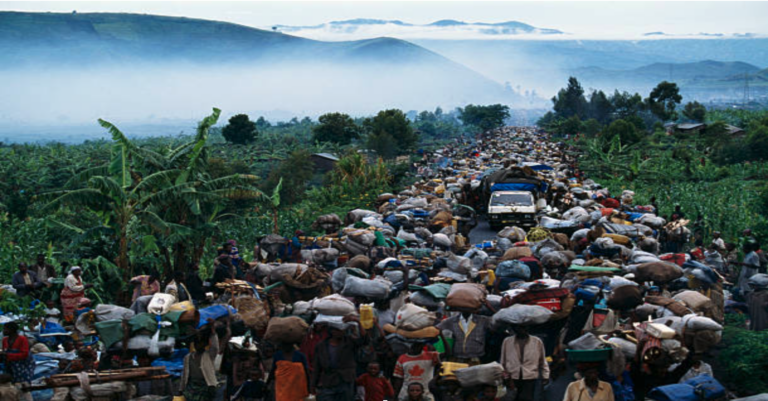
The roots of this conflict stretch back to the aftermath of the 1994 Rwandan genocide, when militias—responsible for the genocidal killings—fled into eastern DRC, regionalizing violence and instability.44United States Holocaust Memorial Museum. “History of Mass Atrocities: Democratic Republic of the Congo.” Accessed 2025. https://www.ushmm.org/genocide-prevention/countries/democratic-republic-of-the-congo/history-of-mass-atrocities Since then, competition for control of the region’s vast natural resources, including cobalt, coltan, and gold, has further fueled the crisis. The humanitarian consequences, including deaths and displacement, are staggering. Since January 2025 alone, over 400,000 people have fled their homes; many joining the 650,000 already displaced around Goma after nearly three years of continuous conflict.45Doctors without Borders, What to know about the Intensified Conflict in DR Congo, (January 27, 2025). https://www.doctorswithoutborders.org/latest/what-know-about-intensified-conflict-dr-congo Entire villages lie empty as families flee violence on foot. With nothing but clothes on their backs, civilians abandon their homes, farms, and communities. They are living in overcrowded camps with inadequate shelter, limited access to food and water, and little to no medical care.46Ibid.
The constant threat of attack and the collapse of essential infrastructure leave the population vulnerable to disease, hunger, and trauma.47World Health Organization, “Dire Health and Humanitarian Crisis in Eastern Democratic Republic of the Congo Prompts Escalation of Efforts,” February 7, 2025. https://www.who.int/news/item/07-02-2025-dire-health-and-humanitarian-crisis-in-eastern-democratic-republic-of-the-congo-prompts-escalation-of-efforts-by-who–partners Warring parties have looted and destroyed hospitals, while sustained fighting has made humanitarian access largely inaccessible. In some areas, crippled infrastructure forces civilians to choose between staying in conflict zones or embarking on dangerous journeys in search of safety.48Amnesty International, Democratic Republic of the Congo: Industrial Mining of Cobalt and Copper for Rechargeable Batteries is Leading to Grievous Human Rights Abuses, (September 12, 2023). https://www.amnesty.org/en/latest/news/2023/09/drc-cobalt-and-copper-mining-for-batteries-leading-to-human-rights-abuses/
This humanitarian catastrophe not only threatens the lives and dignity of millions of Congolese citizens but also risks further destabilization of the already fragile region. The international community, policymakers, and regional leaders must confront this worsening crisis with the urgency and commitment it demands. Without sustained peace and protection for civilians, the cycle of displacement, death, and despair will only deepen.
Illicit Mineral Exploitation: Chinese and Rwandan Involvement in the DRC’s Resource Crisis
The exploitation of the DRC’s vast mineral resources fundamentally defines the ongoing crisis, with mounting evidence pointing to the involvement of both Chinese and Rwandan actors.49International Crisis Group. Averting Proxy Wars in the Eastern DR Congo and Great Lakes. January 23, 2020. https://www.crisisgroup.org/africa/democratic-republic-congo-rwanda-uganda-burundi/b150-averting-proxy-wars-eastern-dr-congo-and-great-lakes These activities intensify local instability and severely harm the lives and livelihoods of ordinary Congolese citizens.
In December 2024, Congolese security forces arrested seventeen Chinese nationals in South Kivu Province for operating unauthorized gold mining sites in the Walungu and Mwenga territories.50Amani Matabaro Tom, China’s Illegal Mining Operations in the Democratic Republic of Congo, (Carr-Ryan Center for Human Rights, Harvard Kennedy School, January 28, 2025). https://www.hks.harvard.edu/centers/carr-ryan/publications/chinas-illegal-mining-operations-democratic-republic-congo Despite the gravity of the offenses, senior authorities in Kinshasa ordered their release without charges. This incident reportedly raised serious concerns about political interference and the lack of accountability in the enforcement of mining laws.51Amani Matabaro Tom, China’s Illegal Mining Operations in the Democratic Republic of Congo, (Carr-Ryan Center for Human Rights, Harvard Kennedy School, January 28, 2025). https://www.hks.harvard.edu/centers/carr-ryan/publications/chinas-illegal-mining-operations-democratic-republic-congo Further revelations came in January 2025, when three more Chinese nationals were detained in eastern DRC with 10 gold bars and $400,000 in cash.52Ibid. These arrests were only made public after the Governor of South Kivu disclosed them to local and international media. According to the same source, over 450 mining companies operate in South Kivu, most of them run by Chinese nationals. However, many of these companies are in violation of Congolese mining regulations, operating without proper licenses or environmental safeguards.53Ibid.
Local communities suffer severe consequences. In areas with active, illegal mining operations, children suffer from high rates of malnutrition, lack of school enrollment, and limited access to clean water.54International Crisis Group. Averting Proxy Wars in the Eastern DR Congo and Great Lakes. January 23, 2020. https://www.crisisgroup.org/africa/democratic-republic-congo-rwanda-uganda-burundi/b150-averting-proxy-wars-eastern-dr-congo-and-great-lakes The destruction of forests and water systems due to unregulated mining makes it harder for displaced families to return to their homes and rebuild their lives.55James Boafo et al., The Race for Critical Minerals in Africa: A Blessing or Another Resource Curse? (Amsterdam: ScienceDirect, vol. 93, June 2024); Patrick Anderson, “Cobalt and Corruption: The Influence of Multinational Firms and Foreign States on the Democratic Republic of the Congo,” Journal for Global Business and Community (March 1, 2023).
Meanwhile, the Rwandan government engages in the illegal Congolese trade. A United Nations report from January 2025 revealed that the M23 rebel group smuggled at least 150 tons of coltan into Rwanda in 2024 alone—the largest known disruption of the mineral supply chain in the Great Lakes region.56Aurel Sèdjro Houenou, Coltan: Rwandan Rebel Group Facilitates Smuggling from DR Congo, New UN Report Claims, (Bankable Africa, Ecofin Agency, January 14, 2025). https://bankable.africa/en/mining/1401-686-coltan-rwandan-rebel-group-facilitates-smuggling-from-dr-congo-new-un-report-claims After taking control of Rubaya, a coltan-rich area in North Kivu, M23 imposed taxes on mining operations and reportedly earned up to $800,000 per month from exports to Rwanda.57Aurel Sèdjro Houenou, “Coltan: Rwandan Rebel Group Facilitates Smuggling from DR Congo, New UN Report Claims,” Bankable Africa, Ecofin Agency, January 14, 2025; TRT Afrika, “More DRC Minerals ‘Illegally’ Shipped into Rwanda: UN,” January 8, 2025. https://bankable.africa/en/mining/1401-686-coltan-rwandan-rebel-group-facilitates-smuggling-from-dr-congo-new-un-report-claims https://www.trtafrika.com/english/article/18251791 Despite its relatively small natural mineral reserves, Rwanda has become a major exporter of valuable minerals such as coltan, gold, cassiterite, and tungsten, essential to the global electronics, aerospace, and jewelry industries. However, experts and international observers have noted a glaring discrepancy between Rwanda’s export volumes and its domestic production capacity. The most plausible explanation remains with the systematic smuggling of minerals from conflict-affected areas of the DRC. These findings, as detailed by the UN and other credible watchdogs, strongly suggest that Rwanda’s government benefits directly from this cross-border trade, facilitated by armed groups like M23.58Nadia Mugunda, “Rwanda’s Role in the Illicit Mineral Trade: A System of Exploitation,” The Rwandan, October 7, 2025; Philippe Dam, “Enough Red Flags Have Been Ignored, EU Must Reconsider Rwanda Relations,” Human Rights Watch, March 28, 2025; Damian Zane, “What’s the Fighting in DR Congo All About?” BBC News, May 2, 2025. https://www.therwandan.com/rwandas-role-in-the-illicit-mineral-trade-a-system-of-exploitation/#google_vignette https://www.hrw.org/news/2025/03/28/enough-red-flags-have-been-ignored-eu-must-reconsider-rwanda-relations https://www.bbc.com/news/articles/cgly1yrd9j3o
These patterns of illegal exploitation, enabled by weak governance, corruption, and foreign complicity, have deepened the suffering of ordinary Congolese citizens. While foreign companies and governments profit from the DRC’s natural wealth, local communities must survive the leftover environmental destruction, economic exclusion, and ongoing violence. The situation underscores the urgent need for stronger regulatory enforcement, transparent mining agreements, and international accountability mechanisms to protect both the people and the resources of the DRC.
Escalation of Ethnic Divisions and Hatred
The ongoing conflict in eastern DRC causes violence, displacement, and worsens long-standing ethnic divisions. Accusations that Rwanda supports the M23 rebel group, mainly composed of Tutsi fighters, fuel growing hostility between ethnic communities in the region.
The ethnicization of the conflict drives a dangerous rise in hate speech, propaganda, and retaliatory attacks, prompting international organizations to raise serious concerns. In 2022, both the United Nations High Commissioner for Human Rights and the UN Special Adviser on the Prevention of Genocide warned that growing hate speech, especially against Kinyarwanda-speaking communities, risks inflaming the situation further and could lead to large-scale human rights violations.59United Nations Peacekeeping, “UN Concerned about Increase in Violence and Hate Speech in Eastern DRC,” MONUSCO, June 20, 2022; Human Rights Watch, World Report 2005: Democratic Republic of Congo, UNHCR Refworld, 2005. https://peacekeeping.un.org/en/un-concerned-about-increase-violence-and-hate-speech-eastern-drc https://www.refworld.org/reference/annualreport/hrw/2005/en/35996
Armed groups and local militias, alongside segments of civilian populations in conflict-affected areas, have harassed, discriminated against, and physically attacked individuals perceived to be Tutsi.60Human Rights Watch, DR Congo: Mob lynches soldier in apparent hate crime, (December 4, 2023). https://www.hrw.org/news/2023/12/04/dr-congo-mob-lynches-soldier-apparent-hate-crime Congolese social media users, including community influencers and supporters of local armed groups, have used online platforms to spread hateful messages and conspiracy theories, further worsening the situation.61Felix Mukwiza Ndahinda, Anti-Tutsi hate speech refuels conflict in eastern DR Congo, (Clingendael Spectator, August 24, 2022). https://spectator.clingendael.org/en/publication/anti-tutsi-hate-speech-refuels-conflict-eastern-dr-congo The legacy of the 1994 Rwandan genocide continues to shape how communities view each other, with enduring deep-seated mistrust. The presence of Hutu militias in eastern DRC and Rwanda’s military involvement further complicated the dynamics, creating a complex web of fear and blame.
These rising ethnic tensions go beyond politics, directly fueling conflict, displacement, and insecurity for ordinary people. Tensions make it harder for communities to live together, for peace talks to succeed, and for displaced families to return home. Without serious efforts to address these divisions, the cycle of violence is likely to continue.
LESSONS
The previous section outlined the devastating consequences of the DRC-Rwanda conflict: widespread displacement, deepening ethnic divisions, environmental destruction, and the illegal exploitation of natural resources. These challenges both destabilized the eastern DRC and exposed the region’s deep-rooted structural weaknesses.
As we shift focus from the implications to the lessons, it becomes clear that this crisis is not solely caused by internal dysfunction. Foreign interference, regional rivalries, and global demand for critical minerals have also shaped it. The involvement of external actors—whether through military support, mineral extraction, or diplomatic mediation—has both complicated the conflict and opened new pathways for resolution.
This section draws key lessons from the crisis and highlights the urgent need to strengthen the DRC’s military capacity and improve governance. It also considers the potential impact of recent peace efforts led by the United States and Qatar. These developments, while fragile, offer a glimpse of what might be possible if diplomacy is matched with accountability and reform. What follows is a closer look at the insights gained and the steps needed to move from instability to sustainable peace.
Fragile Truces in a Region of Deep Mistrust
One of the clearest lessons from the DRC-Rwanda conflict is that ceasefire agreements, no matter how promising, often fail in a region with low trust and routine violence. Despite recent peace efforts led by the United States and Qatar, fighting has continued in areas like South Kivu, showing the fragility of these deals.
According to reports, Rwanda and the DRC have agreed to at least six ceasefires since 2021, all of which have collapsed shortly afterward. The latest truces occurred after M23 rebels withdrew from talks in Angola, following sanctions by the European Union against their leaders and senior Rwandan officials. M23 claimed the sanctions made dialogue impossible, further stalling peace efforts. 62Al Jazeera, DR Congo, M23 rebels announce ceasefire after peace talks in Qatar, (April 24, 2025). https://www.aljazeera.com/news/2025/4/24/drc-m23-rebels-commit-to-pause-fighting-amid-peace-talks Moreover, the deal’s immediate impact on the ground remains uncertain. Analysts caution that while the agreement marks a diplomatic milestone, it may not end the violence quickly. The M23, the most prominent armed group in the region, stated that the accord does not apply to them. Kinshasa and the M23 are currently negotiating a parallel agreement in Doha, but its outcome remains uncertain.63KSBW Action News/Hearst Television, Congo and Rwanda Sign US-Mediated Peace Deal Aimed at Ending Decades of Violence, (June 28, 2025). https://www.ksbw.com/article/congo-and-rwanda-us-mediated-peace-deal/65231135
Analysts and international observers view the Doha Agreement—backed by the African Union and supported by France and the U.S.—as a potential breakthrough, even though they caution that it is unlikely to end the fighting quickly. Many Congolese consider it more of a strategic move to secure U.S. access to critical minerals than a path to peace.64Ibid As with past deals, the real challenge lies in turning promises into action. Local issues like land disputes, ethnic tensions, and the presence of many non-state armed groups complicate efforts to achieve peace.65United Nations Peacekeeping, “UN Concerned about Increase in Violence and Hate Speech in Eastern DRC,” MONUSCO, June 20, 2022. https://peacekeeping.un.org/en/un-concerned-about-increase-violence-and-hate-speech-eastern-drc
President Tshisekedi’s willingness to proceed with the deal demonstrates a significant political step. However, key questions remain unanswered, especially about how mineral profits will be divided. The biggest challenge ahead is whether Rwanda will scale back its presence and influence in eastern Congo, especially regarding its economic interests in the region’s mineral trade. Walking away from these profits without the intense diplomatic pressure that has so far been lacking seems unlikely for Rwanda.
Any agreement that appears to cede control of Congo’s natural wealth could be unpopular at home, especially for President Félix Tshisekedi, who faces ongoing political uncertainty. For the U.S., the success of its minerals-for-peace strategy depends on its ability to manage regional tensions and deliver real investment. Without strong follow-through, these truces risk becoming another failed attempt in a long line of broken promises.
In this context, the lesson is clear: peace cannot be sustained through signatures alone. Without trust, accountability, and real change on the ground, even the most high-profile agreements risk becoming just another broken truce in a long, painful cycle.
Weak Military and Security Challenges
The DRC’s military, the FARDC (Forces Armées de la République Démocratique du Congo), struggles to protect civilians and stop armed groups across the country. This weak military enables more attacks and mass displacement, ultimately deepening humanitarian needs. However, simply calling for a stronger military is not enough; the real challenge lies in defining how to build such a force and ensuring that reforms address both technical capacity and deeper structural issues.
Security sector reform must be comprehensive, including retraining troops, improving discipline, and ensuring accountability for abuses. Many FARDC units appear to lack even basic equipment, such as communication tools, vehicles, and medical supplies.66Ibid. The government must prioritize transparent military spending and use existing military aid packages to upgrade logistics. Past reforms failed because they overemphasized technical fixes and ignored political realities, including corruption, weak leadership, and inadequate civilian oversight.67Evert Kets and Hugo de Vries, Limits to supporting security sector interventions in the DRC, (Institute for Security Studies, July 2014). https://africaportal.org/wp-content/uploads/2023/05/Paper257.pdf Therefore, international financial aid for military upgrades should include strict oversight and accountability mechanisms jointly administered by Congolese parliamentary defense committees, the Court of Accounts, Congolese civil society monitoring groups, and limited third-party auditors from the African Union or the UN, to reduce domestic capacity and credibility constraints.
A key recommendation in the United Nations Security Sector Reform (SSR) guidelines is to prioritize professional training, clear command structures, and the removal of undisciplined or corrupt officers.68United Nations, Security Sector Reform, (United Nations Peacekeeping, Accessed May 22, 2025). https://peacekeeping.un.org/en/security-sector-reform#:~:text=The%20United%20Nations%20assists%20Member,and%20the%20rule%20of%20law This could include:
- Joint military training with trusted partners (e.g., South Africa, Ghana, or MONUSCO support teams), funded through existing UN SSR support programs and AU stabilization funds.
- Human rights and civilian protection training, especially in conflict zones like North and South Kivu, is financed through multilateral donor programs already earmarked for civilian protection initiatives.
Impunity remains a major issue within the FARDC. The government must establish stronger oversight bodies, such as independent military courts and internal disciplinary systems. These measures should be supplemented with external oversight from civilian judges, AU-mandated legal observers, or hybrid tribunals to hold military leaders accountable for abuse, collaboration with armed groups, illegal resource exploitation, or embezzlement of soldiers’ salaries. This strategy will help the government curb corruption and military political interference, boost its credibility, and prevent elite capture. Documented cases of egregious human rights crimes by FARDC units, including ethnic massacres, mass rapes, arbitrary arrests, abductions, and summary executions, underscore the urgent need for reforms that go beyond military equipment and training.69Human Rights Watch, Establishing a Vetting Mechanism for the Security Forces of the Democratic Republic of Congo, (April 7, 2014). https://www.hrw.org/news/2014/04/07/establishing-vetting-mechanism-security-forces-democratic-republic-congo
Technical and intelligence-sharing partnerships with African regional bodies, such as the Southern African Development Community (SADC) and the African Union Peace and Security Council, would improve early warning of conflict, reduce misinformation, and limit the use of proxy armed groups by increasing transparency over troop movements and command responsibility. SADC has previously deployed troops to the region and could help train rapid-response teams within the FARDC.70Southern African Development Community, Deployment of the SADC Mission in the Democratic Republic of Congo, (January 4, 2024). https://www.sadc.int/latest-news/deployment-sadc-mission-democratic-republic-congo Finally, the DRC must focus on rebuilding trust in the military. This requires fair recruitment processes, balanced ethnic representation across the ranks, and merit-based promotions. Practical steps include enforcing recruitment standards, establishing monitored recruitment quotas, creating independent vetting panels, and balanced regional representation targets to track ethnic balance. Promotion criteria should be tied to performance evaluations rather than patronage, requiring all promotions to pass through an independent review board to limit favoritism. Civilian oversight bodies and parliamentary reporting requirements can further reinforce merit-based advancement without relying on rigid ethnic quotas. Without legitimacy, the army will remain disconnected from the population it is meant to protect.
Ultimately, reforming the FARDC and other Congolese security forces, such as the police (Police Nationale Congolaise, PNC), goes far beyond fighting rebels; it redefines state authority, strengthens civilian protection, and aims to break the cycle of violence. Without serious investment in military reform, the DRC remains vulnerable to both internal threats and foreign interference.
Lack of Transparency in Mining and Governance
The DRC has struggled to convert its natural resource wealth into broad-based economic development. While foreign companies and local elites’ profit from mining, most Congolese citizens continue to live in poverty, with little access to basic services like clean water, healthcare, or education.
Government officials and private companies often negotiate and manage mining deals with limited transparency. Foreign investors, including German companies, play a significant role in the DRC’s mining sector. Yet their activities often lack transparency and oversight, raising serious concerns about the protection of local communities and ethical governance.71Gilbert Dhego, Exploitive Mineral Extraction in the DRC Must Stop, (Stiftung Wissenschaft und Politik (SWP), February 15, 2024). https://www.swp-berlin.org/publikation/mta-joint-futures-46-exploitive-mineral-extraction-in-the-drc-must-stop In many cases, companies sign deals without consulting or securing the consent of local communities living on the affected land. Companies conceal details of these deals from the public, making it difficult to know what has been agreed to or how much money is involved. Even when contracts are made public, there are few ways to hold companies or officials accountable when they break the rules or harm the environment.72Marie Chêne, Corruption and Anti-Corruption in the Democratic Republic of Congo (Berlin: Transparency International, October 8, 2010); Calum Rutter, “DRC Growth ‘Hampered by Lack of Transparency over Mining Contracts,’” Public Finance Focus, September 11, 2019. https://assets.publishing.service.gov.uk/media/57a08af3e5274a27b2000875/expert-helpdesk-257.pdf https://www.publicfinancefocus.org/news/2019/09/drc-growth-hampered-lack-transparency-over-mining-contracts
Although private investment brings benefits such as jobs, tax revenue, and infrastructure, these gains are often temporary and unevenly distributed. Because of this, many Congolese view new mining contracts as threats rather than opportunities. In places like Kitutu in South Kivu, local protests have erupted against gold mining projects viewed as exploitative.73Ibid. Citizens feel that companies drain natural wealth while their towns remain poor and neglected.
The Extractive Industries Transparency Initiative (EITI) reported that the DRC has made progress in publishing mining contracts and revenues.74Reuters, Congo improves extractive sector transparency but more needed – anti-graft body, (October 21, 2022). https://www.reuters.com/markets/commodities/congo-improves-extractive-sector-transparency-more-needed-anti-graft-body-2022-10-20/ The EITI made 200 contracts public, including deals with Chinese companies and sanctioned individuals.75Reuters, Congo improves extractive sector transparency but more needed – anti-graft body, (October 21, 2022). https://www.reuters.com/markets/commodities/congo-improves-extractive-sector-transparency-more-needed-anti-graft-body-2022-10-20/ However, the government still struggles to enforce transparency rules and ensure that mining profits benefit the public. Many agreements remain hidden, and the implementation of their profits remains unclear.
The government introduced new rules through its 2018 and 2022 Mining Codes, intended to improve transparency and increase revenue into the country’s economy.76Protech Consulting, Mining License Application Legal Support in the DRC, August 9, 2025; Herbert Smith Freehills Kramer, The Democratic Republic of Congo’s Revised Mining Code, April 25, 2018. https://protech-consulting.org/mining-license-application-legal-support-in-the-drc/ https://www.hsfkramer.com/insights/2018-04/the-democratic-republic-of-congos-revised-mining-code The DRC also adopted the ICGLR Regional Certification Mechanism to enhance transparency and legality in mineral supply chains.77Neeraja Kulkarni, Going Beyond “Conflict-free”: Transition Minerals Governance in DRC and Rwanda, (New Security Beat, Wilson Center, July 31, 2024). https://www.newsecuritybeat.org/2024/07/going-beyond-conflict-free-transition-minerals-governance-in-drc-and-rwanda/ Yet these efforts often fall short in practice. Political instability, weak institutions, and insufficient funding impede the enforcement of rules.
Without strong governance, transparency, and enforcement of mining laws, the DRC’s mineral wealth continues to enrich a few, leaving the majority behind. Opaque contracts and illegal networks, often supported by foreign actors and local elites, drain resources that could otherwise promote development and peace. Managing mining openly, fairly, and accountably is essential in transforming the country’s natural wealth into a driver of inclusive growth, stability, and national sovereignty.
PROGRESS
This section outlines key steps needed to resolve the ongoing conflict between the DRC and Rwanda. The following recommendations aim to reduce violence, restore trust, and promote long-term stability. They include strengthening regional diplomacy through African-led peace efforts, enforcing ceasefire agreements with credible monitoring, ending foreign exploitation of Congo’s mineral wealth, particularly by China, and investing in local communities while addressing ethnic tensions. Together, these actions offer a realistic path toward peace, stability, and dignity for the people most affected by the conflict.
I. Strengthening Regional Diplomacy and African Ownership
A lasting solution to the DRC–Rwanda conflict requires more than ceasefires and externally brokered agreements. Recent deals involving the United States and Qatar illustrate the complexity of international mediation, but they also expose a deeper issue: African governments continue to depend on external actors to resolve internal disputes. This dependence undermines regional ownership and weakens the foundation for sustainable peace. To move forward, African states must take greater leadership in conflict resolution, supported, not led, by international partners.
Too often, outsider-led peace processes reflect their own strategic interests rather than the lived realities of people affected by the crisis. When international powers dominate negotiations, the resulting agreements feel distant, imposed, or disconnected. This weakens trust among local communities and reduces the chances of building a lasting peace.
Yet past examples show that African-led peace missions can work. In the 1990s, the Economic Community of West African States (ECOWAS), through the ECOMOG, its monitoring group’s peacekeeping force, intervened in Liberia and Sierra Leone, helping to halt hostilities, disarm warring factions, stabilize governments, pave the way for negotiated settlements, and support democratic elections.78United Nations, “United Nations Observer Mission in Liberia (UNOMIL),” United Nations Peacekeeping, accessed May 22, 2025; Conciliation Resources, “Nigerian Intervention in Sierra Leone,” Accord, September–October 1997; Cyril I. Obi, Economic Community of West African States on the Ground: Comparing Peacekeeping in Liberia, Sierra Leone, Guinea Bissau, and Côte d’Ivoire (London: Taylor & Francis Group, December 15, 2009); Asim Rizvanovic, “Violent Peacekeeping: An Evaluation of the Performance of ECOWAS in the First Liberian Civil War (1989–1996),” E-International Relations, September 5, 2013. https://peacekeeping.un.org/mission/past/unomilFT.htm https://rc-services-assets.s3.eu-west-1.amazonaws.com/s3fs-public/NigerianIntervention_199710_ENG.pdf https://www.tandfonline.com/doi/full/10.1080/19362200903361945#abstract https://www.e-ir.info/2013/09/05/violent-peacekeeping-an-evaluation-of-the-performance-of-ecowas-in-the-first-liberian-civil-war-1989-1996/#google_vignette These missions succeeded in large part because they combined regional legitimacy, deep cultural understanding, and strong political will, enabling them to enforce ceasefires, protect civilians, and support the restoration of stable governance. These qualities are often lacking in foreign-driven interventions. In contrast, today, many contemporary African-led responses falter due to weak institutions, limited resources, and fragmented political coordination, limiting their ability to achieve comparable outcomes.
This gap allows external actors to fill the vacuum. However, relying on foreign powers to lead peace initiatives risks undermining the continent’s sovereignty and its ability to shape its own future. Outsiders may help bring warring parties to the table, but they often prioritize short-term stability over long-term solutions rooted in justice, equity, and local engagement.
To move forward, African countries must take the lead in solving their own problems. This necessitates greater investment in African peace institutions to build stronger political unity and ensure that outside help supports, not controls, African-led solutions. This requires sustained funding from African governments through assessed contributions, supplemented by predictable support from the African Development Bank and tightly conditioned external partners. Protecting African sovereignty is key; without it, countries like the DRC will remain vulnerable to exploitation and external pressure.
Leaders across the continent must stand together to push for economic and political solutions that put African people first. By choosing African-led solutions, peace in the DRC can become real and lasting. This becomes achievable when regional pressure, aid conditionality, and access to development financing are tied to measurable governance and anti-corruption benchmarks. This approach brings the process closer to the people it’s meant to help and ensures that what works in Africa truly works for Africans.
II. Respect and Enforce Ceasefires
The recent ceasefire agreement between the DRC and Rwanda, brokered by the United States and Qatar, offers a rare opportunity to halt the cycle of violence in eastern DRC. However, for this agreement to succeed where others have failed, both countries must take deliberate and verifiable steps to enforce the truce.
First, both the DRC and Rwanda must immediately and publicly cut all ties with armed groups operating in the region, stop covert support, and cooperate with neutral monitors to verify compliance. Rwanda’s alleged support for the M23 rebels and the DRC’s connections with local militias have fueled mistrust and prolonged the conflict. Previous peace efforts, such as the Luanda Process, collapsed in 2024 because both sides continued backing armed proxies, reneging on the ceasefire agreement.
To ensure that the ceasefire holds, a joint monitoring mechanism should be established under the leadership of the African Union. This body must include neutral observers and representatives from both countries, with the authority to investigate and report violations. The AU’s involvement is critical not only for neutrality but also for reinforcing African ownership of the peace process. This model draws from successful elements of past interventions, such as the post-war monitoring in Côte d’Ivoire (2002-2007), where regional and international cooperation helped stabilize the country after years of civil conflict.79Alexander Shipilov, Ten Years After the Ivorian Civil War (2002–2011): Reassessment of the Conflict, (South African Journal of International Affairs 29, no. 1 (March 2022): 1–24). https://www.researchgate.net/publication/359015112_Ten_years_after_the_Ivorian_civil_war_2002-2011_Reassessment_of_the_conflict In the Gambia’s 2017 political transition, ECOWAS-led mediation and enforcement, backed by the African Union and UN, prevented large-scale violence and ensured compliance through regional legitimacy and coordinated oversight. ECOWAS backed a peaceful transition when Yahya Jammeh refused to leave office and ensured a peaceful transfer of power.80UN Office for West Africa and the Sahel, July 2017 Monthly Forecast, published June 30, 2017, Security Council Report; Virginia Comolli, The Gambia: Operation Restore Democracy (International Institute for Strategic Studies, January 27, 2017); ECOWAS Is Still Pivotal to Steadying The Gambia’s Transition (Institute for Security Studies, February 25, 2025). https://www.securitycouncilreport.org/monthly-forecast/2017-07/un_office_for_west_africa_and_the_sahel_1.php https://www.iiss.org/online-analysis/online-analysis/2017/01/gambia/ https://issafrica.org/iss-today/ecowas-is-still-pivotal-to-steadying-the-gambia-s-transition
Enforcement must also include consequences. Ceasefire violations should not be ignored. Instead, they should trigger clear responses like targeted sanctions, public exposure, political isolation of state or non-state actors, or suspension from regional bodies such as the East African Community or the AU. The United Nations emphasized that ceasefires without enforcement mechanisms are unlikely to succeed, as seen in its 2022 guidance on mediation practices.81United Nations Department of Political and Peacebuilding Affairs, Guidance on the Mediation of Ceasefires, (September 2022). https://peacemaker.un.org/sites/default/files/document/files/2022/11/ceasefire-guidance-2022-0.pdf
Another essential step is implementing disarmament, demobilization, and reintegration (DDR) programs. These programs must be well-funded and community-based, offering former fighters a path back into civilian life. The national government should jointly finance DDR programs, the United Nations Peacebuilding Fund, and donor partners like the World Bank to ensure sustainability and oversight. Sierra Leone’s post-war DDR program (2002-2005) is a strong example of how such efforts can help rebuild trust and reduce the risk of renewed violence.82Mohamed Gibril Sesay and Mohamed Suma, Transitional Justice and DDR: The Case of Sierra Leone (New York: International Center for Transitional Justice, June 2009); United Nations Mission in Sierra Leone, “Thousands of Ex-Fighters Disarmed and Reintegrated,” December 2005; Keith Martin, “Disarmament and Demobilisation in Sierra Leone,” Humanitarian Practice Network, June 5, 2003. https://www.ictj.org/sites/default/files/ICTJ-DDR-Sierra-Leone-CaseStudy-2009-English.pdf https://peacekeeping.un.org/mission/past/unamsil/factsheet1_DDR.pdf https://odihpn.org/en/publication/disarmament-and-demobilisation-in-sierra-leone/
Local communities also need to be part of the peace process. Peace cannot be enforced from the top down. Civil society groups, traditional leaders, and residents must have a voice in observing and guiding peace efforts. Their involvement ensures that the process reflects the realities on the ground and builds the trust needed for long-term stability.
Peace can be achieved when it is based on real actions, not just statements. That includes:
- Joint military disengagement and verified withdrawals from occupied areas
- Transparent sharing of information with monitoring teams
- Regular reporting to a neutral peace council or panel
- Strict bans on supplying weapons or funding to militias
Finally, while international partners like the U.S. and Qatar provide diplomatic facilitation, targeted financial support, and technical monitoring assistance, the leadership of the peace process must remain African. The failure of past peace efforts in the DRC often stemmed from a lack of local ownership and weak enforcement of ceasefire terms.
Countries like Liberia, Sierra Leone, Mozambique, and Côte d’Ivoire have shown that peace is possible when ceasefires are respected, militias are disarmed, and communities are engaged. The DRC and Rwanda now have a chance to follow that path; the question is whether they will choose to do so.
III. Support for Local Communities and Addressing Ethnic Tensions
Lasting peace in eastern DRC demands enforceable security reforms, accountable governance, and sustained political commitment, not just symbolic ceasefires. The deeper issues, such as wounds, poverty, neglect, and ethnic mistrust, must also be addressed. In areas torn apart by violence, rebuilding trust starts with investing in people’s daily lives. This means providing basic services like schools, hospitals, clean water, and jobs, especially in conflict-affected regions like North Kivu, Ituri, and South Kivu. When people see their government responding to their needs, trust grows, and armed groups lose support—since they tend to fill the security void left by a weak state. 83Kimberly Gianopoulos, Peace and Security in the Congo Has Not Improved with Conflict Minerals Disclosure Rule, (U.S. Government Accountability Office, October 8, 2024). https://www.gao.gov/blog/peace-and-security-congo-has-not-improved-conflict-minerals-disclosure-rule
At the same time, the ethnic divisions that have fueled decades of conflict must be confronted directly. Hate speech, discrimination, and targeted violence have left deep scars. Reconciliation efforts must be honest, inclusive, and long-term. In Rwanda, the National Unity and Reconciliation Commission (NURC), established in 1999, offers a practical model.84Anastase Shyaka, The Rwandan Conflict: Origin, Development, Exit Strategies (Kigali: The National Unity and Reconciliation Commission, 2004). https://repositories.lib.utexas.edu/server/api/core/bitstreams/8f5561a2-c08c-4bb4-9a94-e1838eb14baa/content After the 1994 genocide, Rwanda faced a society torn apart by fear, hatred, and mistrust.
The NURC responded with a set of clear, community-based programs that helped rebuild social cohesion. These included civic education campaigns, community dialogues, and truth-telling forums that enabled survivors and perpetrators to speak openly and to begin the long process of healing. The Commission also worked with local leaders to combat hate speech, promote inclusive governance, and support trauma recovery through counseling and community support networks.
While these efforts were not perfect, they made a difference. Rwanda’s experience shows that reconciliation is not just about forgiveness; it’s about creating space for people to live together again with dignity and safety.85Sarah Kasande and Christmas Tafadzwa, “Thirty Years On, Lessons from Rwanda on Transitional Justice and Atrocity Prevention in Africa | International Center for Transitional Justice,” ICTJ, May 1, 2024, https://www.ictj.org/latest-news/thirty-years-lessons-rwanda-transitional-justice-and-atrocity-prevention-africa. At the same time, local leaders, civil society, and religious institutions must be empowered to lead reconciliation efforts, especially in regions where ethnic violence has been most severe.
If the DRC’s government can support these communities to feel safe and respected, the roots of this conflict can begin to heal. Without this, even the best political agreements will not hold. Peace must be felt in daily life and reinforced with tangible, actionable measures.
CONCLUSION
This report has examined the DRC–Rwanda conflict, its root causes, current challenges, major implications, and practical solutions. Both internal weaknesses—such as poor governance, corruption, ethnic divisions, and a weak military—and external interference by foreign powers influence this conflict. The presence of non-state armed groups, including the M23 rebels, has made eastern DRC a dangerous and unstable area for millions of civilians.
This report began by outlining the role of resource competition, especially over cobalt, lithium, and other critical minerals. Although the DRC supplies most of the world’s cobalt, the Congolese people see little benefit. Instead, revenues are lost to corruption, violence, and foreign control. The report also examined how Rwanda’s alleged support for armed groups like M23 has fueled instability, leading to international concern and a call for stronger regional diplomacy.
Recent peace initiatives like the Washington Accord and the Doha truce bring a glimmer of hope, but they are still fragile. Previous ceasefires have failed, and trust between the two governments remains low. Still, these efforts represent a critical step toward regional cooperation and international accountability.
This report identified key implications of the conflict: the mass displacement of over seven million people, a worsening humanitarian crisis, deepening ethnic tensions, and a mining economy dominated by foreign and illegal actors. These issues have eroded public trust, widened social divides, and weakened state authority.
From this analysis, the following lessons emerged. The DRC’s military must be reformed with better training, discipline, and oversight. Ethnic and community reconciliation must be prioritized. Foreign investment must be transparent, legal, and beneficial to local communities. Most importantly, African-led solutions must take center stage, supported but not directed by global powers.
In response, this report provides a clear set of recommendations: enforce and monitor the ceasefire agreements; strengthen the FARDC through comprehensive reform; enforce compliance to eliminate illegal foreign operations, particularly unlawful mining by Chinese and Rwandan actors; prioritize African diplomatic leadership; and invest in rebuilding trust through basic services and the protection of minority communities.
In the end, the conflict in the DRC is not just about war; it is about how power, resources, and people are treated. Solving this ongoing crisis will require regional cooperation, political will, and the courage to put the interests of ordinary Congolese citizens first. With the right actions, peace is possible, and the DRC can begin to turn its wealth into a real opportunity for its people.
Foreign Policy and Diaspora Studies Lab (FP&DS-LAB)
About the ACSTRAP Foreign Policy and Diaspora Studies Lab
This report was prepared by the Foreign Policy and Diaspora Studies Lab of the Africa Center for Strategy & Policy. The objective of the FP&DS-LAB is to focus on regional and international affairs, particularly on the implications of great power competition in Africa. The lab looks at institutional policies at the level of the African Union and the relations among African states and the international community.
About the Authors/Lab Contributors
Iniobong Inyang: Research Analyst
Iniobong Inyang is a graduate student in Global Studies at the University of Oklahoma and holds a bachelor’s degree in French. Her research focuses on political developments in Sub-Saharan Africa, with a growing specialization in conflict analysis, security studies, political instability, armed group dynamics, and authoritarianism in the region. She has conducted extensive analytical work on governance, democracy, civil–military relations, and regional geopolitics, drawing on her background in Francophone African literature and politics. Iniobong actively monitors and assesses political trends across Sub-Saharan Africa and has produced policy-oriented reports on governance, elections, and conflict. Based in the United States, she aims to contribute to policymaking and scholarly work on African political affairs, regional security, and democratic processes.
About the Africa Center for Strategy & Policy (ACSTRAP)
ACSTRAP Policy & Strategy reports are published by The Africa Center for Strategic Progress (ACSTRAP). ASCSTRAP is the first policy think tank to adopt a genuinely African-solution-centered and data-driven approach to African policy and strategy. We are a non-partisan think tank focusing on ANALYZES, EVALUATIONS & DEVELOPMENT of policy and Strategy in view of African governments, peoples, and stakeholders.
The Africa Center for Strategy & Policy takes no institutional positions on strategy and policy issues and has no affiliation with any government. All opinions, conclusions, and recommendations expressed or implied in its publications and other platforms are the sole responsibility of the author(s).
Copyright © by The Africa Center for Strategy & Policy
All rights reserved. No part of this report may be reproduced or transmitted in any form by electronic or mechanical means now known or to be invented, including photocopying, recording, or information storage and retrieval systems, without permission in writing from the publisher, except by a reviewer who may quote brief passages in a review.
Africa Center for Strategy & Policy
USA Headquarters
1300 I St NW Suite 400 E Washington, DC 20005
Email: info@africacfsp.org
Website: www.acstrap.org
Africa Center for Strategy & Policy
Africa Headquarters

Based on your interests, you may also wish to read:
- The LID Unlidded: West African Countries’ United Attempt to Increase Cocoa Farmers’ Income
- Russia’s Influence in Africa: The Problematic Use of Quasi-State Corporations
- Conflict and Institutional Change in Sub-Saharan Africa
- The Politics of Dual Citizenship and the African Diaspora: How Political is Dual Citizenship?