
BACKGROUNDER: The Expansion of Al-Qaeda in the Sahara-Sahel
Author: Dr. Robin Hardy
Senior Vice President of Global research and Policy Development, Africa Center for Strategy and Policy
In little more than a decade, a number of terrorist attacks in the Sahara-Sahel are attributed to and/or associated with al-Qaeda such as: al-Qaeda in the Islamic Maghreb-(AQIM), Le Mouvement Pour L’Unification et le jihad en Afrique de l’Ouest (MUJAO); al-Mourabitoun; Ansar al-Din; al-Mouakaoune Biddam; Ansarul Islam, and Jama’at Nusrat al-Islam wal-Muslimin (JNIM). Assaults across an ever-broadening geography have been launched, including: the January 2013 seizure of an internationally-owned natural gas plant in Eastern Algeria killing 37; a November 2015 attack on the Westerner-frequented Radisson Blu Hotel in Bamako (Mali) resulting in the death of 27; the January 2016 assault on a Westerner-frequented hotel, restaurant, and police station in Ouadagoudou (Burkina Faso) killing 30; and a March 2016 attack on a popular Westerner-frequented beach resort in Grand-Bassam (Ivory Coast) in which 19 individuals were slain. In August 2017 terrorists killed18 people at a café in Ouagadougou (Burkina Faso) followed the next spring in March 2018 with the attack on a French embassy and army headquarters also in Ouagadougou (Burkina Faso) with a death toll of as many as 88.1https://main.un.org/securitycouncil/en/sanctions/1267/aq_sanctions_list/summaries/individual/abu-ubaydah-yusuf-al-anabi;“Abu Abaydah Yusuf al-Anabi” in Africa (sub-Sahara) Near East (North Africa and the Middle East), Rewards for Justice (United States Government). https://rewardsforjustice.net/rewards/abu-ubaydah-yusuf-al-anabi/; and “Extremist Leaders – Abu Abaydah Yusuf al-Anabi” in Counter-Extremism Project. No signature. https://www.counterextremism.com/extremists/abu-ubaydah-yusuf-al-anabi; “Abu Abaydah Yusuf al-Anabi” in United Nations Security Council – Sanction List.
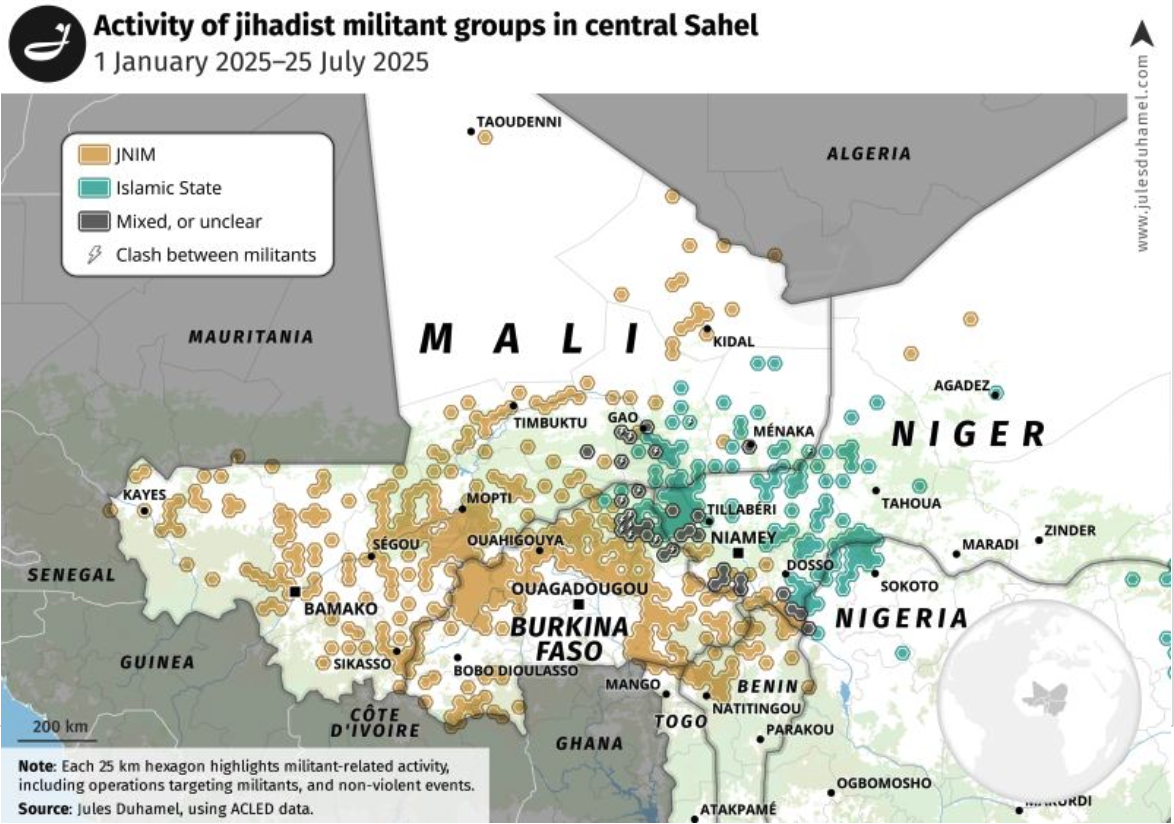
The past few years have shown JNIM to be the most prolific al-Qaeda group in the region designating itself as the Mali branch of al-Qaeda. Combining fighters from affiliations such as Ansar al-Din, Katibat Macina, al-Mourabitoun, Ansar al-Islam, and al-Qaeda in the Islamic Maghreb – the Sahara branch of AQIM—a succession of ferocious attacks have occurred including: the June 2017 assault on a tourist resort near Bamako (Mali) killing five; in Mali in February 2018 the killing of two French nationals; followed in March 2018 by dual attacks in Ouagadougou (Burkina Faso) on the French embassy and the general staff of the Burkina Faso army resulting in at least eight deaths. Three months later in June 2018 JNIM attacked the headquarters of the The Joint Force of the Group of Five for the Sahel (G5 Sahel) in Sévaré (Mali) killing at least six people. Largescale JNIM assaults appeared attenuated when a spectacular attack occurred in September 2024 in Bamako (Mali) with a military training school and airport as targets resulting in the death of 75-100 individuals. In April 2025 JNIM attacked military installations in Benin near the border with Burkina Faso and Niger killing at least 54. The next month in May (2025) the group terrorized military positions in Djibo (Burkina Faso) and several other locations within a 30-mile radius resulting in the death of as many as 260 soldiers; quickly followed by another JNIM assault in June 2025 on a military base in Boulkessi (Mali) bordering Burkina Faso killing 60. The same month (June 2025) JNIM targeted military installations in Timbuktu (Mali) resulting in the death of at least 60. Within a matter of days in July 2025, the group carried out another massive attack on seven military installations in the far west of Mali as well as near the Senegal and Mauritanian borders resulting in the death of 80. The next month in August 2025 more Malian military were targeted in the Ségou region (Mali) injuring an unknown number of soldiers. Last fall in October 2025 the group made its first assault on Nigeria near the Benin border attacking soldier positions killing one individual.2“Violent Extremism in the Sahel,” Center for Preventive Action, Global Conflict Tracker, Sep 4 2025. Al-Qaeda affiliates such as JNIM seem less concerned with holding territory than carrying out violence that will garner worldwide attention. Military bases, multi-national industrial sites, and commercial establishments known for international presence are at greatest risk for al-Qaeda plots. Extremist violence in Africa has increased to the point of being designated the deadliest place in the world, the al-Qaeda dense sub-Saharan-Sahel region registering 59% of all terrorism deaths each year.3https://main.un.org/securitycouncil/en/sanctions/1267/aq_sanctions_list/summaries/individual/abu-ubaydah-yusuf-al-anabi; “Deputy-General’s Remarks at the Security Council on Maintenance of International Peace and Security: countering terrorism in Africa”, United Nations, Januray 21 2025; Jean-Herve Jezequel, “The 17 September Jihadist Attack in Bamako: Has Mali’s Security Strategy Failed?”, Q&A Africa, International Crisis Group, September 24 2024; “The Organization of Al-Qaida in the Islamic Maghreb,” Security Council, United Nations; Riya Sippy and Jacob Boswall, “How an a-Qaeda offshoot became one of Africa’s deadliest militant groups,” BBC News, Jul 7 2025; “August 2025Monthly Forecast,” Africa: West Africa and the Sahel, Security Council Report, July 30 2025; “JNIM Expanding Geographic Reach and Staging Coordinated Attacks in the Sahel,” Intelbrief, The Soufan Center, June 5 2025; and “Burkina Faso gun attack kills 18people at café,” BBC News, August 14 2017. With the aim of effective African and international counter-terrorist policy this backgrounder first looks at a longtime figurehead within the group: Abu Ubaydah Yusuf al-Anabi; second, al-Qaeda’s philosophy in the region; third, methods and means of operation; finishing with what the future holds for the organization within its current area of operation and the region’s periphery.
Profile of an al-Qaeda Leader in the Sahara-Sahel
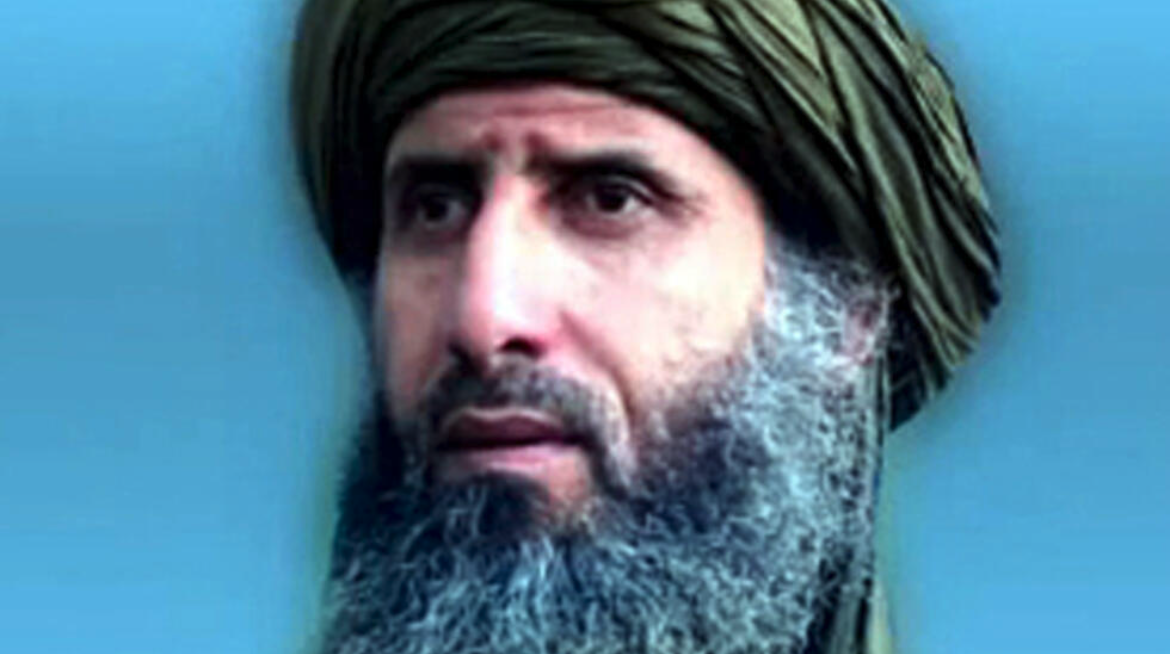
Abu Ubaydah Yusuf al-Anabi has been a longtime leader for AQIM (al Qaeda in the Islamic Maghreb). Dating back more than two decades, AQIM is the first al-Qaeda designation in a growing network of associated groups that have carried out terror attacks in the Sahara-Sahel. Al-Anabi’s resilience begs further investigation. What is al-Anabi’s background? What are the likely reasons for this individual’s radicalization? And finally, what can be expected from al-Anabi and AQIM moving forward?
Yezid Mebarek was born in Algeria on February 7, 1969, in the coastal city of Annaba near the border with Tunisia. Details surrounding Mebarek’s early childhood are murky but matters crystallize by early adulthood. At University of Constantine in El Khroub, Mebarek’s studies focused on engineering but revealing an interest in religion and politics he first joined the Islamic Salvation Front, then became a member of the Islamic Salvation Army, later followed by aggressive participation in the Armed Islamic Group of Algeria—a faction in the Algerian Civil War (1991-2002). Mebarek’s radicalization intensified when he made the critical acquaintance of a fellow Algerian, Abdelmalik Droukdel (killed by French special ops in Mali – June 2020). Droukdel was a religious extremist, the Algerian Civil War fomenting his radicalization. Droukdel worked with the Movement of the Islamic State then the Armed Islamic Group and the Salafist Group for Preaching and Combat where he would encounter Mebarek. By 2004, Droukdel was leading the GSPC and from 2006 Droukdel linked with al-Qaeda by pledging allegiance to Osama bin Laden (killed by the U.S. in Pakistan, May 2011). In 2007, Droukdel changed GSPC’s name to al-Qaeda in the Islamic Maghreb (AQIM). Yezid Mebarek was indispensable to Droukdel. The man who became Abu Ubaydah Yusuf al-Anabi was known for his media and communications expertise, bringing global attention to AQIM’s growing terror plots.4“Al-Qaida in the Lands of the Islamic Maghreb (AQIM)” in Foreign Terrorist Organizations, January, 2023. No signature; “Abu Abaydah Yusuf al-Anabi” in Africa (sub-Sahara) Near East (North Africa and the Middle East), Rewards for Justice (United States Government). https://rewardsforjustice.net/rewards/abu-ubaydah-yusuf-al-anabi/; and “Extremist Leaders – Abu Abaydah Yusuf al-Anabi” in Counter-Extremism Project. No signature. https://www.counterextremism.com/extremists/abu-ubaydah-yusuf-al-anabi; “Abu Abaydah Yusuf al-Anabi” in United Nations Security Council – Sanction List. https://main.un.org/securitycouncil/en/sanctions/1267/aq_sanctions_list/summaries/individual/abu-ubaydah-yusuf-al-anabi; and https://main.un.org/securitycouncil/en/sanctions/1267/aq_sanctions_list/summaries/individual/abdelmalek-droukdel
Following the death of Droukdel in 2020, it was widely anticipated that AQIM would announce al-Anabi as the organization’s leader. As the new emir of the most violent al-Qaeda global affiliate, al-Anabi pledged his allegiance to Ayman al-Zawahiri – head of al-Qaeda in the Middle East (killed by the U.S. in Kabul, 2022). Already in 2015, al-Anabi had been placed on the infamous “black list” designated by the United States as one of the most violent terrorists in the world with a price of $7 M (U.S.) for information leading to his location or whereabouts (renewed – 2021). In 2016, al-Anabi was added to the United Nations Sanctions List due to his al-Qaeda association.5“Abu Ubaydah Yusuf al-Anabi,” Extremist Leaders, Counter Extremism Project, 2025.
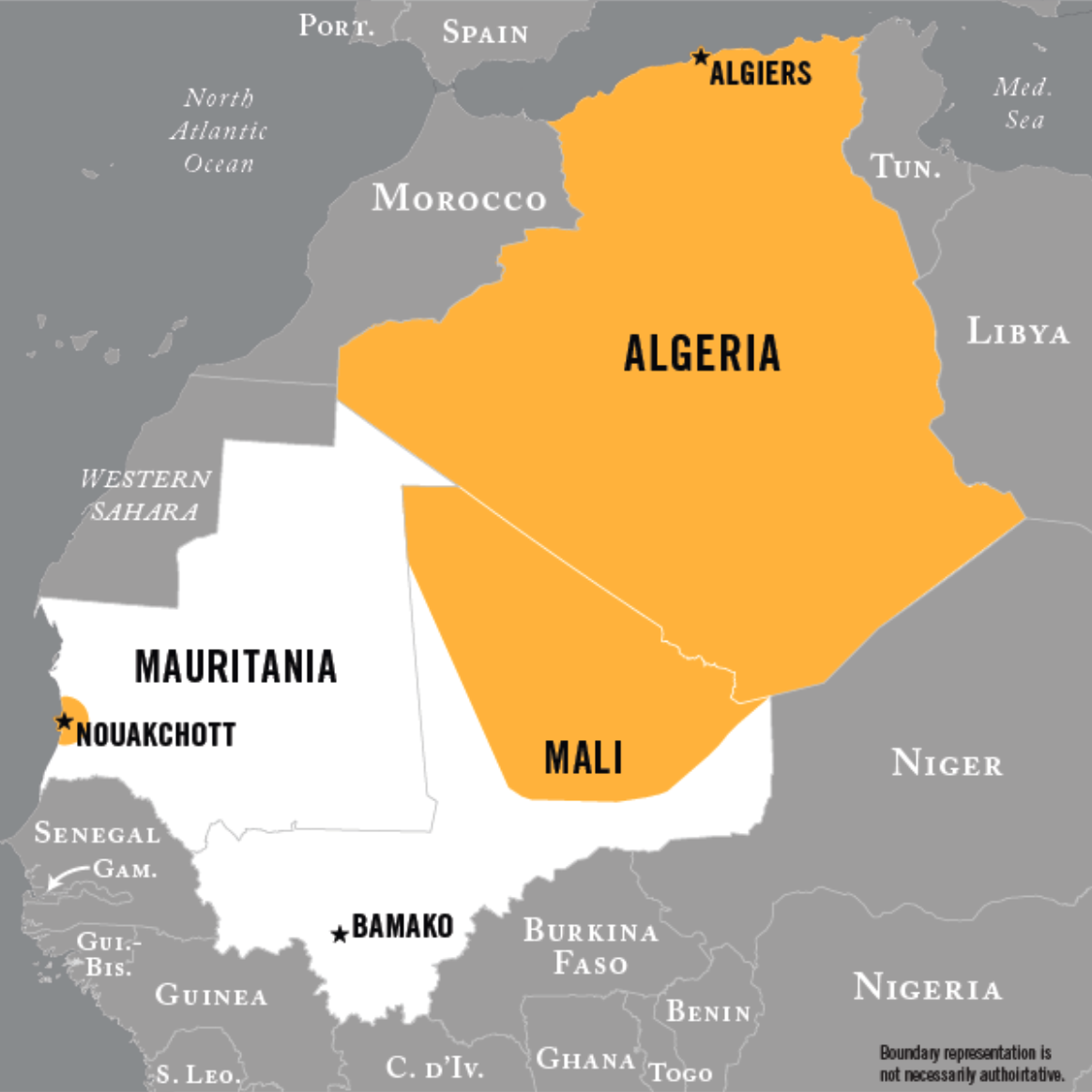
Two factors emerge regarding al-Anabi’s whereabouts and predictable future behaviors. First, while AQIM carried out early attacks in Mali (notably in 2012 and 2015) – a consistent site of al-Qaeda violence in the Sahara-Sahel – al-Anabi has long demonstrated a preference for his home country of Algeria where his contacts are extensive. Indeed, the Malian military has recently stepped up its defense against terrorists, but the newer faction JNIM has been its primary focus.6Rama Yade and Hussein Ba, “Mali has not just plunged into crisis. It has been unraveling for years,” Africa Source, Atlantic Council, October 31 2025. It is a possibility that given al-Anabi’s strong familiarity with operatives and territory in Algeria—the largest country by sheer size in Africa—the AQIM leader has managed to conceal his location farther north amidst trusted contacts spanning thousands of small villages across massive stretches of coastline and Saharan desert. Algerians may well fear al-Anabi more than the lure of a 7 million (U.S.) reward.
Al-Anabi remains critical to watch in the region since, alongside Droukdel, the first oaths to support al-Qaeda’s main organization in the Middle East were uttered, bringing key contacts, training, fighters, and cash flow to the Sahara-Sahel. Moreover, while early reports suggest that JNIM may be distancing from al-Qaeda, there is no credible information demonstrating that Iyad Ag Ghaly (leader of the aggressive JNIM branch) is refusing financial support from AQIM nor has Ghaly supplanted al-Anabi to become the region’s ultimate emir of al-Qaeda. This posits that al-Anabi continues to see his role as longtime figurehead of al-Qaeda in the central Sahara-Sahel leaving Iyad Ag Ghaly to carry out the group’s goals farther south and East.
Philosphy of Al-Qaeda in the Sahara-Sahel
Al-Qaeda’s philosophy in Africa is strongly influenced by al-Qaeda core beliefs launched by Bin Laden in the late 1980s and early 1990s at the tail end of the Soviet-Afghan war. Most critical for Al-Qaeda development in the Sahara-Sahel, Bin Laden supported the repelling of foreign invasion and influence over Muslim lands. Bin Laden adopted the view that the U.S. was the primary enemy to Muslims, a perception that was significantly enhanced during the 1991 Gulf War. Al-Qaeda’s first offshoot in the region—al Qaeda in the Lands of the Islamic Maghreb (AQIM)—as well as affiliates and fractious associations (such as JNIM) not only view the United States (and allies, particularly Israel) as the greatest threat to Islam but support another jihadist idea which emphasizes the need to destroy local African governments deemed corrupt or too closely associated with the West. For the longtime figurehead al-Anabi, the Algerian Civil War (1991-2002) played an important role in the development of this philosophy, evident in the GSPC’s transition to al-Qaeda designation. In opposition to the traditional Islamic State (IS) tenets that target Muslims deemed to be apostates—which has led to the explosion of sectarian violence in IS territories—Al Qaeda in the Sahara-Sahel continues to place greater emphasis on the destruction of international enemies. Still, if fellow Muslims are not the top priority, as with al-Qaeda terrorists elsewhere, AQIM destroys African governments with strong ties to the West (and increasingly other international governments, such as Russian operatives in Mali), replacing government officials with handpicked Salafist Sunnis who adhere to Sharia beliefs. Al-Qaeda affiliates favor larger attacks that will garner immediate international attention. This in opposition to IS terror that typically is more sporadic, local-based and focused on generating fear within a local population with brutal displays of violence (beheadings, etc.).7Daniel L. Byman, “Comparing a-Qaeda and Isis: Different Goals, Different Targets,” Brookings, April 29 2015.
Means and Methods
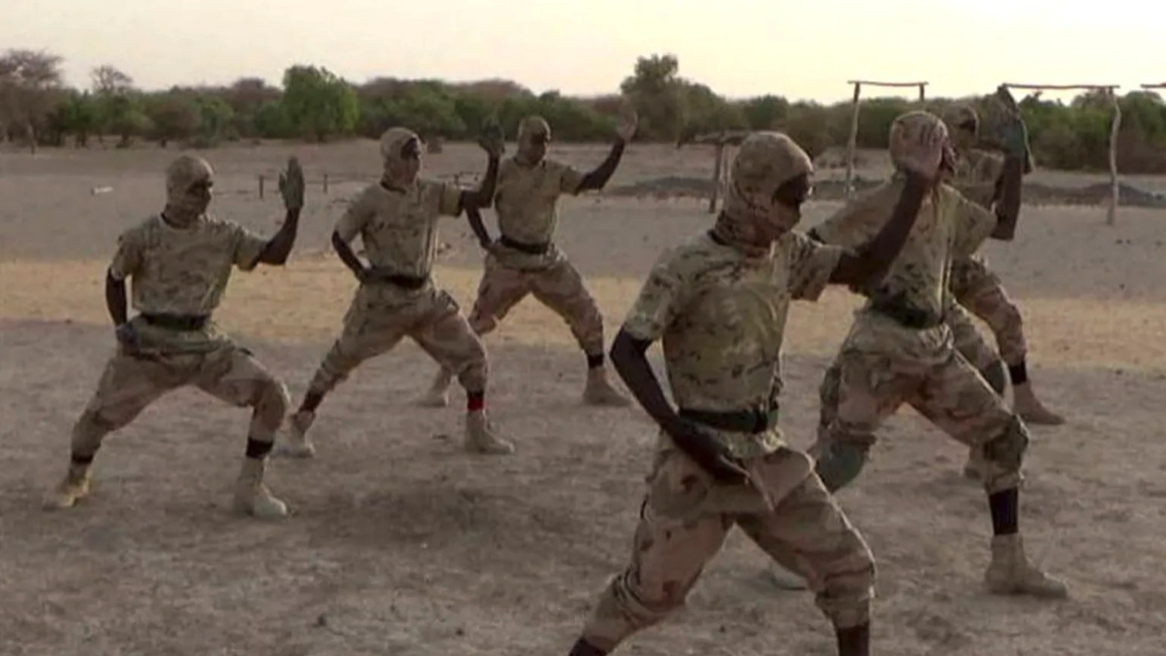
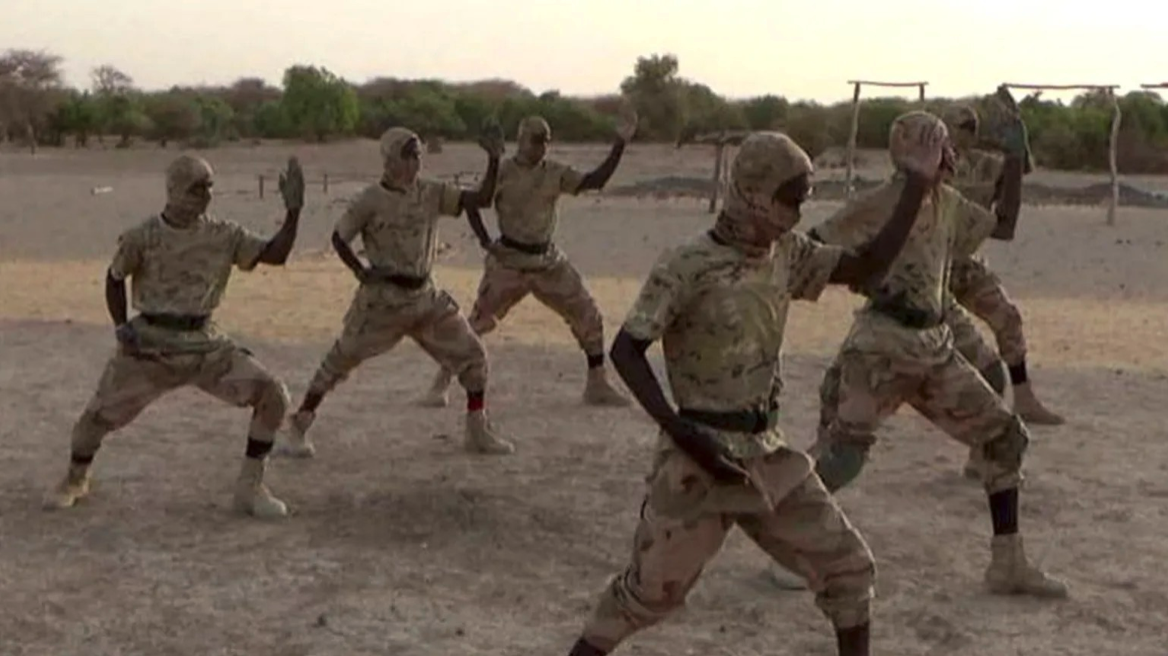
The GSPC’s larger militia during the early 2000s with tens of thousands of fighters has splintered into smaller regional al-Qaeda jihadist pods. Recent mergers, linkages and dissident associations have thus led to an explosion of micro-group violence with between 500 to 1,000 fighters per group across more territory than AQIM’s original North African base. What therefore began in Algeria has expanded to include Tunisia, Mali, Libya, Burkina Faso, Benin, Niger, Nigeria, as well as porous borderland territories near Mauritania, Senegal, Cote D’Ivoire, and Togo—metastasizing from the Central Sahara to the Sahel and West African coast. Al-Qaeda linkages survive on financial support from associated groups, donations, seizure of individuals for ransom, illicit drug and weapon trade, migrant extortion, and economic extraction from populations over which they have gained military and political authority. Surprise attacks with mortars, machine guns, rockets, improvised explosive devices (IEDs) are the basis of al-Qaeda assault methodology. Fighters move between groups bringing sophisticated training to new territories of operation. Most at risk for al-Qaeda attacks are foreign mercenaries and soldiers, international tourists, and African military, police and government officials.8Daniel L. Byman, “Comparing Al Qaeda and ISIS: Different goals, different targets,” Brookings, April 29 2015; Jami T. Forbes, “The Revival of Al Qaeda,” Defense University Press, February 10 2020.
Policy Suggestions and Conclusion
As this backgrounder has shown, the rise of al-Qaeda in the Sahara-Sahel is a complex problem. Yet closely analyzing the development, mission, and methods of this longstanding terrorist organization can assist in addressing this regional threat. There are three key strategies that should be implemented to combat this deadly phenomenon. The first is inspired by the U.S. military tactic in Iraq referred to as “winning the hearts and minds” of Iraqis (following U.S./coalition strikes in the aftermath of the toppling of Saddam Hussein, especially 2003-2011). In other words, if civilian casualties take the greatest toll in African terrorism, it is also true that locals are more likely to ally with and support terrorists whom they believe are protecting them from a violent and/or corrupt government. Al-Qaeda terrorists, such as AQIM, JNIM and other affiliates, guarantee protection to those populations over which they have control. Equally, products and services are more likely to flow to those who demonstrate allegiance to a terrorist group. Long-term success in fighting al-Qaeda in the Sahara-Sahel must attend to the very basic needs of a local population, guaranteeing security and sustenance in a region where dire food insecurity and malnutrition have led to an exploding youth population ripe for jihadist recruitment. This is not only true for al-Qaeda in the Sahara-Sahel (the focus of this assessment) but also for Islamic State affiliates, the most violent over the past years: The Islamic State’s Central African Province (ISCAP) and The Islamic State’s Sahel Province (ISSP).
Second and perhaps surprising, combatting the organization’s growth includes a crucial need for a very simple but laser-like focus on shutting down the media capabilities of AQIM, JNIM and other offshoots and linkages. The past several years have shown some attempts to address this issue, but much more needs to be done. While not as sophisticated or as currently prevalent as the Islamic State (IS), Al-Qaeda’s growing network in the region nevertheless turns to social media to promote the jihadist message as was seen by the first major responsibility of the current AQIM emir, Abu Ubaydah Yusuf al-Anabi. The medium’s far-reaching capability means that terrorist group engagement with social media is a critical tenet of recruitment and financial support and therefore must be better addressed.
Finally and to conclude, while Al-Qaeda in the Sahara-Sahel is linked to al-Qaeda elsewhere, notably including al-Shabaab in Somalia (horn of Africa) and in the Near East, the Arabian Peninsula, and the Indian subcontinent, it is important to go beyond the current process of designating FTOs (Foreign Terrorist Organizations) and SDGTs (Specially Designated Global Terrorists) to end transnational access to financial resources. Especially in the Sahel, the intensification of coups has both increased government instability and made joint-state financial agreements more difficult to coordinate and implement. Previously respected African inter-state organizations such as ECOWAS have lost both teeth and bite (following denouncement from states such as Mali, Niger, and Burkina Faso) challenging extra-African cooperation and cross-national bank collaboration. Still, individual African governments should be more engaged in searching economic-flow pathways to terrorist operatives. In the case of al-Qaeda, strong financial coordination between fighter groups—increasingly with the non-Middle East branches supporting the larger al-Qaeda global organization—means that to end legitimate and illegitimate access to resources, more exposure of financial corridors needs to be traced and shut down. Notwithstanding clandestine cash-only operations that operate in the vast Sahara-Sahel “black market”—such as drug trafficking, mineral trade (gold and uranium, etc.), weapons trade and kidnapping for ransom—a close global survey of al-Qaeda will reveal opportunities for African governments to shut down access to financial stash and streams to staunch the flow of economic support for this deadly organization.

Based on your interests, you may also wish to read:
- Backgrounder: The Risk of Islamic Insurgency in Senegal: A Foreboding History
- Why has violence increased since Cameroon’s National Dialogue?
- Protection of Civilians After UNAMID? Rising Violence Amid the Mission’s Looming Exit
- “We Will Crush You Like Lice:” The Spectre of Political Violence in Zimbabwe